
When you have an anal fissure, a small tear in the lining of the anus that causes sharp pain during bowel movements. It’s not just uncomfortable—it can make you avoid the toilet, change your diet, or even skip work. Also known as anal tear, it’s one of the most common yet misunderstood conditions affecting the lower digestive tract. Most people assume it’ll heal on its own, and often it does—but only if you stop doing the things that keep it open.
Chronic fissure, a tear that lasts longer than 6–8 weeks. Also known as long-term anal fissure, it doesn’t fix itself without help. This isn’t rare—about 1 in 10 people with an acute fissure end up here. What’s worse? Many try home remedies like witch hazel or sitz baths and feel better temporarily, but the root cause stays: hard stools, muscle spasms, or poor blood flow to the area. You can’t just wash it clean. You need to change how your body moves waste. That’s where bowel movement pain, the sharp, burning sensation during and after pooping. Also known as defecation pain, it’s the main signal your fissure isn’t healing properly. If you’re holding back because of pain, you’re making it worse. Constipation feeds the cycle. So does straining, spicy food, or sitting too long on the toilet.
Healing isn’t about magic ointments or expensive supplements. It’s about reducing pressure, relaxing the sphincter, and keeping things soft. Stool softeners like docusate, high-fiber diets, and warm baths aren’t optional—they’re the foundation. Some people need nitroglycerin ointment or Botox to break the spasm cycle. Surgery is rare, but when other options fail, it’s effective. The key isn’t speed—it’s consistency. You don’t need to do everything at once. Just stop the habits that keep the wound open.
What you’ll find below are real cases and clear comparisons: how one person healed with diet alone, why another needed medication, what treatments actually work based on patient results, and what’s just hype. No guesswork. No vague advice. Just what helps, what doesn’t, and how to know which path is right for you.
Written by Mark O'Neill
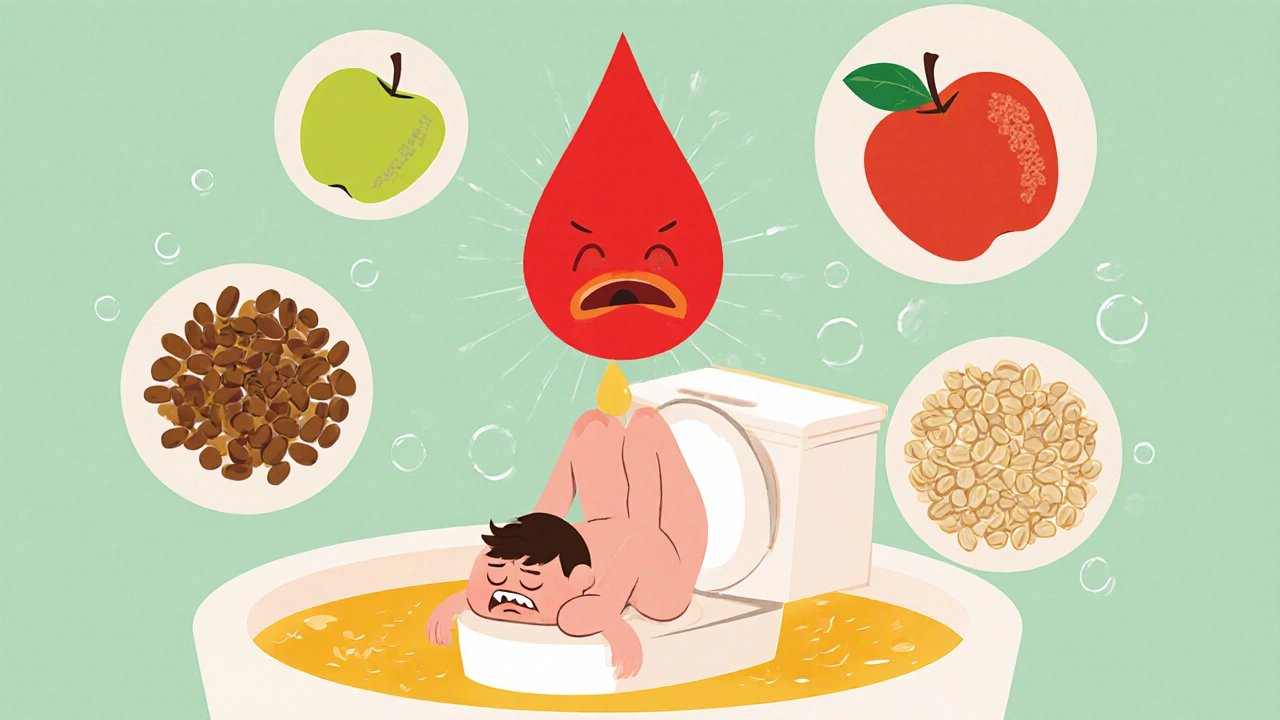
Anal fissures cause sharp pain during bowel movements but often heal with diet and simple home care. Learn what triggers them, how to treat them with proven methods, and when to see a doctor.