
When you store insulin, a life-saving hormone used to control blood sugar in people with diabetes. Also known as human insulin, it's not just medicine—it's a delicate biological product that breaks down if not kept at the right temperature. Even if it still looks clear and normal, insulin exposed to extreme heat or freezing can lose its power. You might not notice until your blood sugar spikes for no reason, and that’s when it’s already too late.
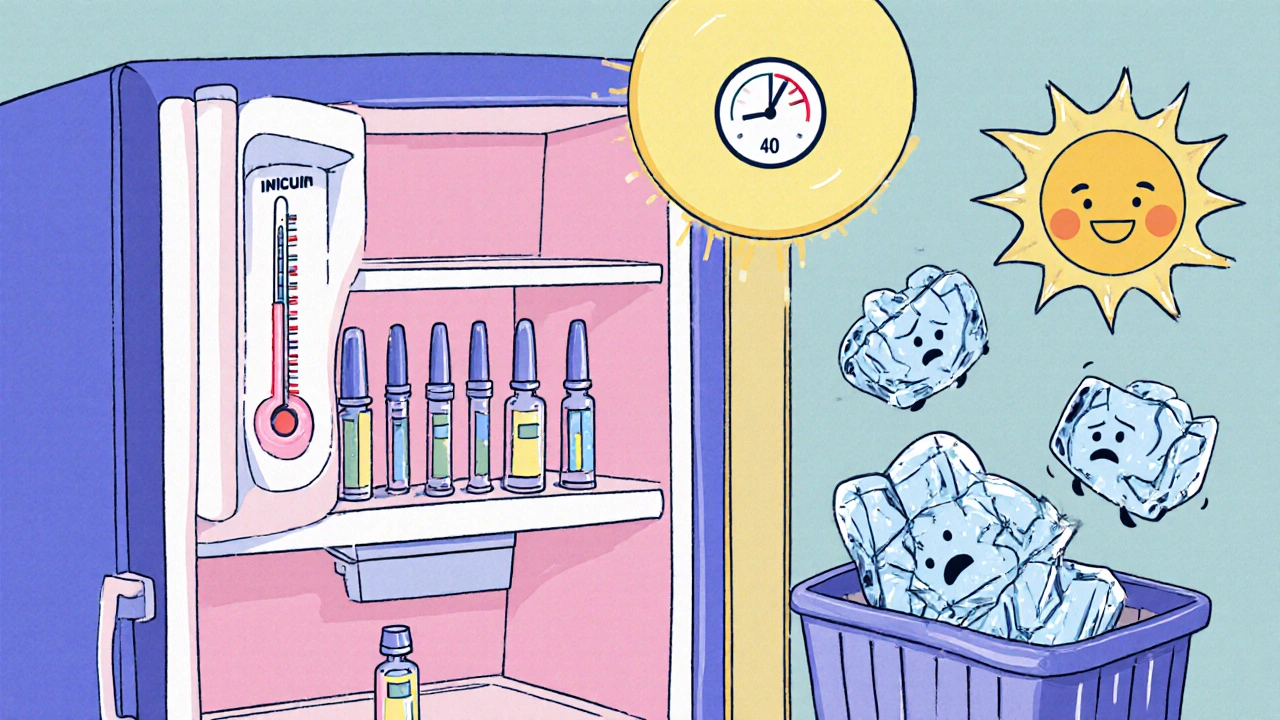
Insulin storage, the practice of keeping insulin at stable, cool conditions isn’t optional. Unopened insulin vials or pens need to stay between 36°F and 46°F (2°C to 8°C), usually in the fridge. Once you start using a pen or vial, it can stay at room temperature—up to 86°F (30°C)—for about 28 to 42 days, depending on the type. But if you leave it on a sunny windowsill, in a hot car, or in a checked suitcase during travel, you’re risking ineffective doses. Insulin spoilage, when insulin loses potency due to temperature abuse doesn’t always look like clumping or discoloration. Sometimes it just stops working quietly.
And it’s not just about the fridge. Insulin travel, carrying insulin while on the go is a daily challenge for millions. Airports, road trips, summer hikes—each one tests your insulin’s resilience. Insulin shouldn’t freeze in checked luggage, and it shouldn’t bake in a purse on a 90°F day. Many people use insulated pouches with cool packs, but even those can fail if not used right. Some newer insulins are more heat-stable, but assuming that’s true without checking the label is a dangerous habit.
You don’t need fancy gear to protect your insulin. Just know the rules: keep it cool, not frozen. Keep it dry, not sweaty. And never trust a bottle that’s been left in the glovebox. If you’re unsure whether your insulin is still good, throw it out. It’s cheaper than a trip to the ER from high blood sugar.
Below, you’ll find real stories and practical advice from people who’ve learned the hard way what happens when insulin temperature isn’t taken seriously. From airport security tips to what to do when your fridge breaks, these posts cover exactly what you need to keep your treatment working—every single day.
Written by Mark O'Neill
Learn how to store insulin pens, vials, and supplies correctly to ensure effectiveness and safety. Avoid common mistakes that lead to wasted medication and dangerous blood sugar swings.