
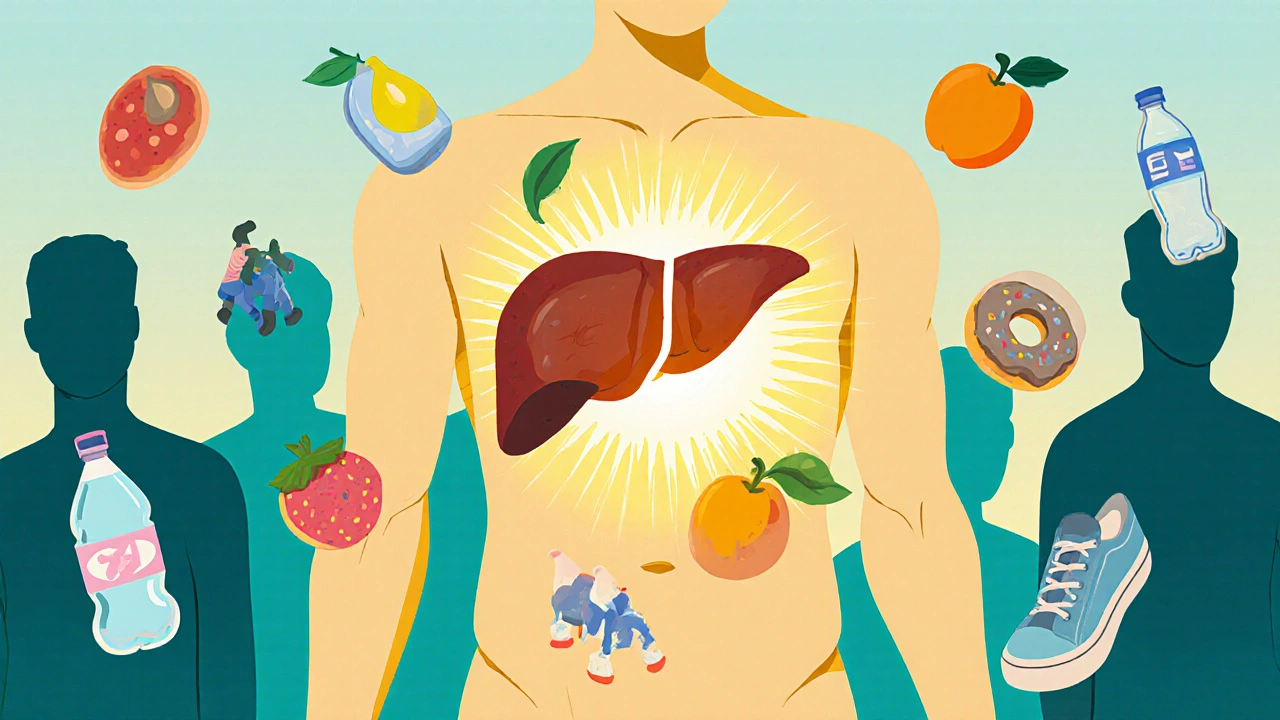
When your liver disease, a condition where the liver is damaged and can’t perform its vital functions. Also known as hepatic disease, it’s not just one illness—it’s a group of disorders that can quietly damage your body over years before you feel anything serious. The liver filters toxins, makes bile, stores energy, and helps control blood sugar. When it’s hurt, everything else starts to struggle. You might not notice at first. Fatigue, bloating, or yellowish skin? These aren’t just "off days." They could be your liver asking for help.
Liver disease often starts with fatty liver, a buildup of fat in liver cells, often from poor diet, obesity, or excessive alcohol. Also known as non-alcoholic fatty liver disease (NAFLD), it affects nearly one in three adults and can progress silently. Left unchecked, it can lead to cirrhosis, scarring of the liver tissue that replaces healthy cells and blocks blood flow. Also known as advanced liver fibrosis, it’s often irreversible and increases the risk of liver failure or cancer. Medications like clozapine or hydrochlorothiazide can stress the liver, especially if you’re already at risk. Even common painkillers, when taken long-term, can contribute. Your liver doesn’t scream—it whispers. And too many people ignore the whispers until it’s too late.
Some causes are obvious—alcohol, hepatitis, obesity. Others are hidden: drug interactions, undiagnosed metabolic conditions, or even supplements that sound "natural" but aren’t safe for your liver. You don’t need to be a heavy drinker to develop liver damage. Many people with fatty liver never touch alcohol. The good news? Early-stage liver disease can often be reversed. Cutting sugar, losing weight, stopping harmful meds, and avoiding toxins can let your liver heal itself. Blood tests, imaging, and lifestyle changes are your best tools. The posts below cover real cases: how certain drugs affect liver function, what symptoms to watch for, how to protect your liver while managing other conditions, and when to push for testing. No fluff. Just what works.
Written by Mark O'Neill
Early detection of liver failure can prevent life-threatening damage. Learn the hidden signs, who should get tested, and simple steps to protect your liver before it's too late.