
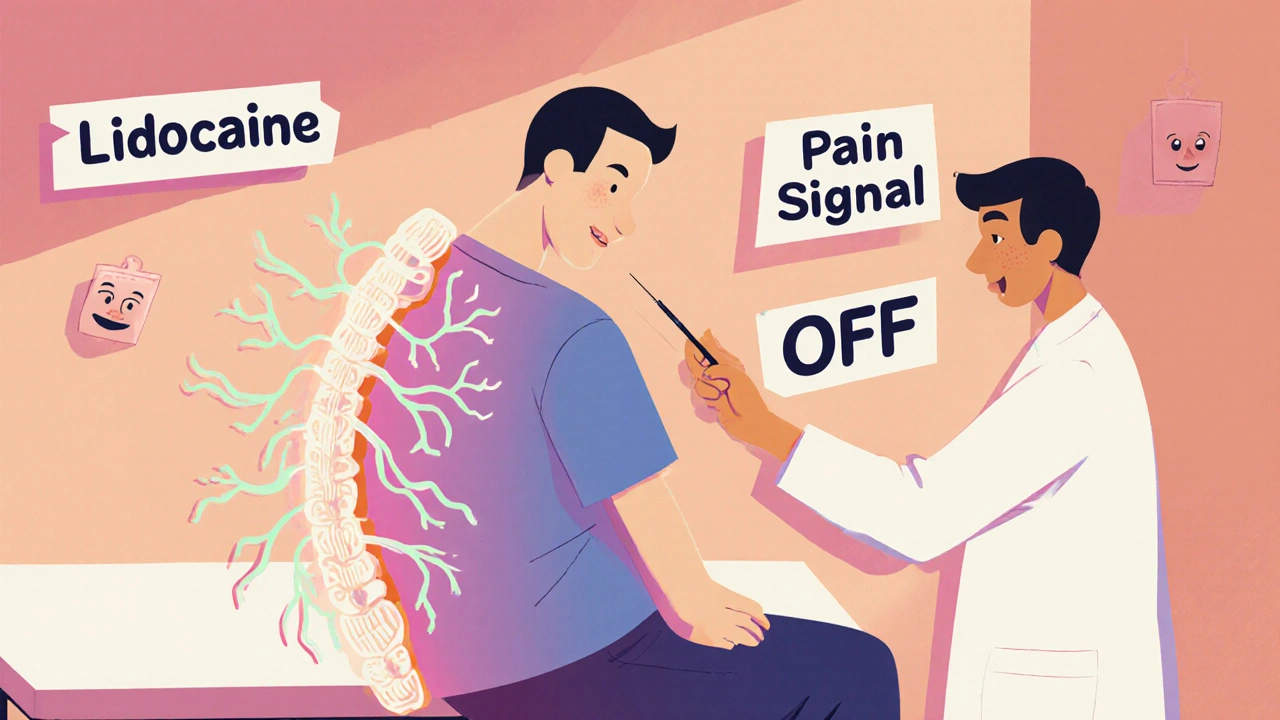
When you hear nerve blocks, a medical procedure that stops pain signals by injecting medicine near a specific nerve or group of nerves. Also known as regional anesthesia, it’s not just for surgery—it’s a go-to tool for managing chronic pain, post-op recovery, and even stubborn headaches. Unlike pills that flood your whole system, nerve blocks target the source. That means less side effects, faster relief, and often fewer meds overall.
Nerve blocks are used in all kinds of situations. For example, someone with chronic lower back pain might get a lumbar epidural block, a type of nerve block that targets nerves in the lower spine to reduce radiating leg pain. Someone with severe migraines might benefit from an occipital nerve block, an injection behind the head that calms overactive nerves causing pounding headaches. Even after knee surgery, a femoral nerve block, a numbing shot near the thigh nerve that cuts pain without full sedation can help you move sooner and need less opioids.
These aren’t magic fixes—they’re tools. The relief can last hours, days, or sometimes months, depending on the medicine used and the condition. Some people get temporary relief just to get through rehab. Others use them as part of a longer plan to avoid surgery or reduce daily pill use. What’s clear is that when done right, nerve blocks cut through the noise of general pain meds and hit the exact spot causing trouble.
You’ll find posts here that dig into real-world cases: how nerve blocks help with heel pain caused by nerve irritation, how they fit into recovery after surgery, and why some people with nerve-related back pain find relief when other treatments fail. You’ll also see how they connect to broader pain management strategies—like physical therapy, medication timing, and even how lifestyle affects nerve sensitivity. This isn’t just about injections. It’s about understanding your body’s pain signals and learning how to quiet them, safely and effectively.
Written by Mark O'Neill
Nerve blocks and radiofrequency ablation (RFA) offer targeted, minimally invasive relief for chronic pain. Learn how they work, how long results last, and who benefits most from each procedure.