
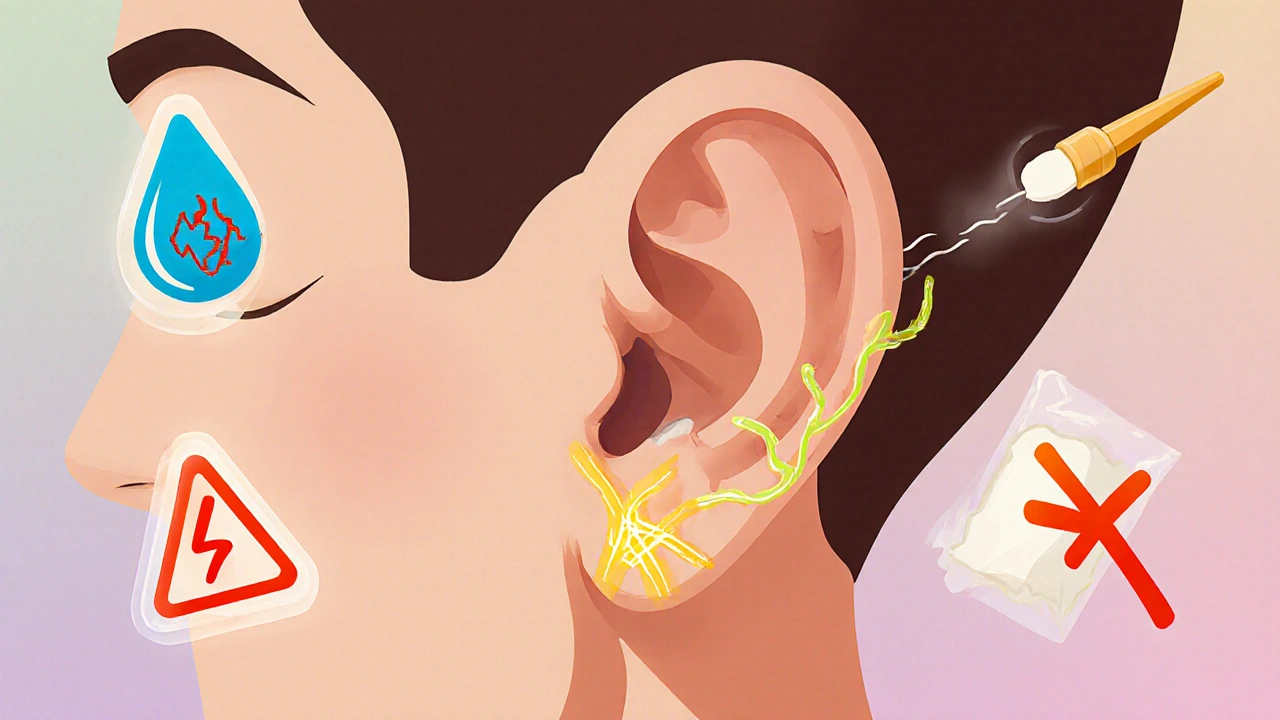
When your ruptured eardrum, a tear or hole in the thin tissue separating your ear canal from your middle ear. Also known as a perforated eardrum, it can happen from loud noises, infections, trauma, or even sudden pressure changes—it’s scary, but it’s often not as serious as it feels. Most ruptured eardrums heal on their own within a few weeks, without surgery or fancy treatments. The body’s natural repair system kicks in, and new tissue grows to close the gap. But not all cases are the same. Some need help. Some get worse if you ignore the signs. And a lot of people make mistakes while trying to heal it faster.
What causes a ruptured eardrum? It’s usually one of three things: a bad ear infection that builds pressure until the membrane gives way, a sudden loud blast like fireworks or an explosion, or something poking into the ear—like a cotton swab, bobby pin, or even a child’s toy. People often think ear pain means infection, but if the pain suddenly stops after being sharp and intense, that’s often a sign the eardrum has burst. That’s when you should pay attention, not relax. Fluid leaking from the ear, hearing loss, ringing, or dizziness are red flags. If you’ve had a recent head injury or water got trapped in your ear after swimming or showering, that’s another reason to get it checked. A doctor can confirm it with a simple ear exam, no X-ray needed.
Healing a ruptured eardrum isn’t about speed—it’s about safety. You don’t need antibiotics unless there’s an active infection. Putting drops in your ear without a doctor’s go-ahead can make things worse. Water in the ear? Keep it dry. No swimming, no showering without ear plugs, no blowing your nose hard. If you have allergies or a cold, managing that helps the healing process. Pain? Over-the-counter pain relievers like ibuprofen or acetaminophen work fine. But don’t try home remedies like warm oil or garlic—it’s not science, it’s risky. And if you don’t feel better in 2-3 weeks, or if you start having more hearing loss, dizziness, or pus draining out, you might need a specialist. In rare cases, a tiny patch or surgery is needed to close the hole.
What you’ll find below are real, practical guides from people who’ve been through this. Some posts talk about how ear infections, a common trigger for eardrum rupture lead to perforations. Others explain how ear pain, the most common symptom can be mistaken for something else. And there’s advice on what medications to avoid or use safely during recovery. No fluff. No guesswork. Just what actually helps when your eardrum is damaged—and what could make it worse.
Written by Mark O'Neill
A perforated eardrum can heal on its own in weeks, but only if you protect it properly. Learn the timeline, what to avoid, and when to see a doctor to prevent permanent damage.