
When you smoke, you’re not just inhaling smoke — you’re exposing your body to over 7,000 chemicals, hundreds of them toxic, and nearly 70 known to cause cancer, a group of diseases where cells divide uncontrollably and spread to other parts of the body. It’s not just about lung damage. Smoking weakens your heart, scars your airways, ruins your sense of taste, and speeds up aging. Even if you only smoke a few cigarettes a day, your risk of heart attack, stroke, and chronic lung disease stays high. And it’s not just you — secondhand smoke puts kids, partners, and coworkers at risk too.
Quitting isn’t easy, but it’s the single best thing you can do for your health. Within 20 minutes of your last cigarette, your heart rate drops. In 12 hours, carbon monoxide leaves your blood. After one year, your risk of heart disease is cut in half. After five years, your stroke risk matches that of someone who never smoked. The nicotine addiction, a physical and psychological dependence on nicotine that drives continued tobacco use is real, but it’s not a life sentence. Many people try multiple times before quitting for good. What works? Some find success with nicotine patches or gum. Others use prescription meds like varenicline. Counseling, apps, and support groups help too. The key isn’t perfection — it’s persistence.
Smoking doesn’t just affect your lungs — it’s tied to over 20 diseases, including chronic obstructive pulmonary disease, a group of lung conditions that cause breathing problems due to damaged airways and air sacs, and lung cancer, the leading cause of cancer death worldwide, often linked directly to tobacco use. Even if you’ve smoked for decades, quitting now still adds years to your life. You’ll breathe easier, sleep better, and feel more energy. And you’ll reduce the chance of passing on these risks to the people around you.
Below, you’ll find real advice from people who’ve been there — how to handle cravings, what to expect when you quit, and how to protect your health after stopping. You’ll also see how smoking connects to other health issues, from heart problems to medication side effects. No fluff. No guilt. Just what you need to know to make a change — or support someone who is.
Written by Mark O'Neill
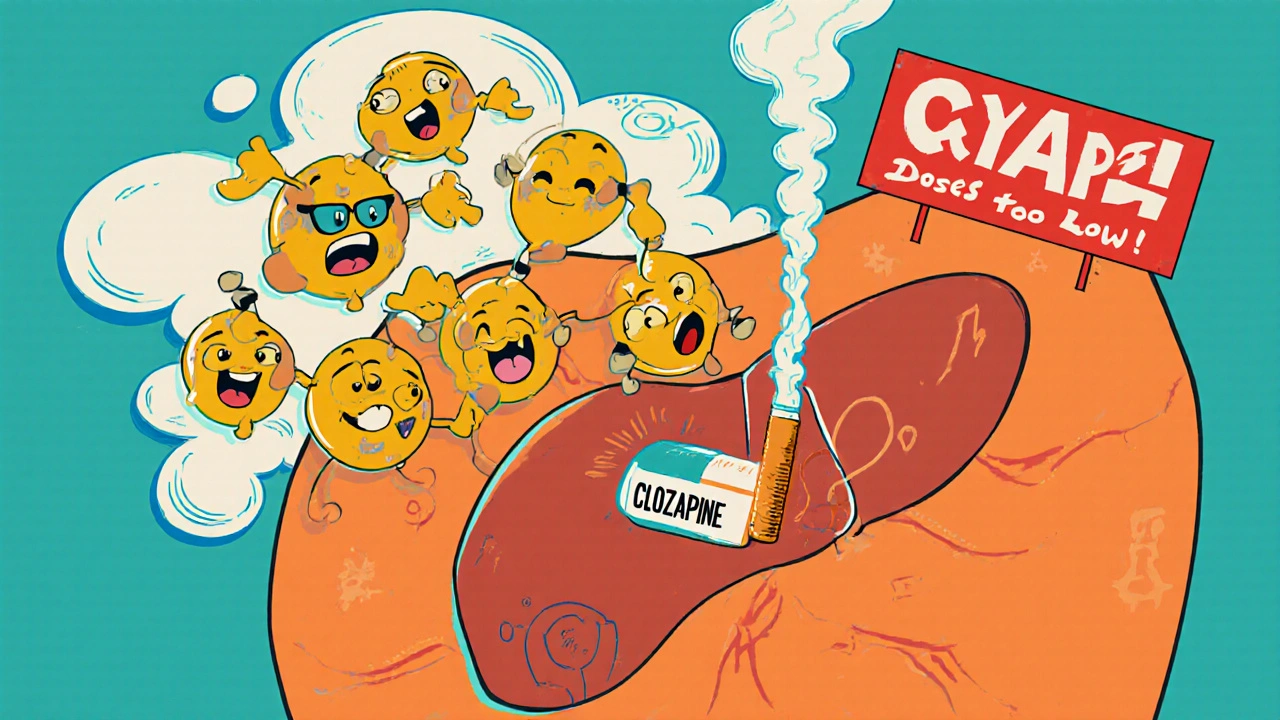
Clozapine levels drop sharply in smokers due to CYP1A2 enzyme induction, requiring higher doses. Quitting smoking can cause dangerous toxicity if doses aren't reduced. Blood monitoring and careful adjustments are essential.