
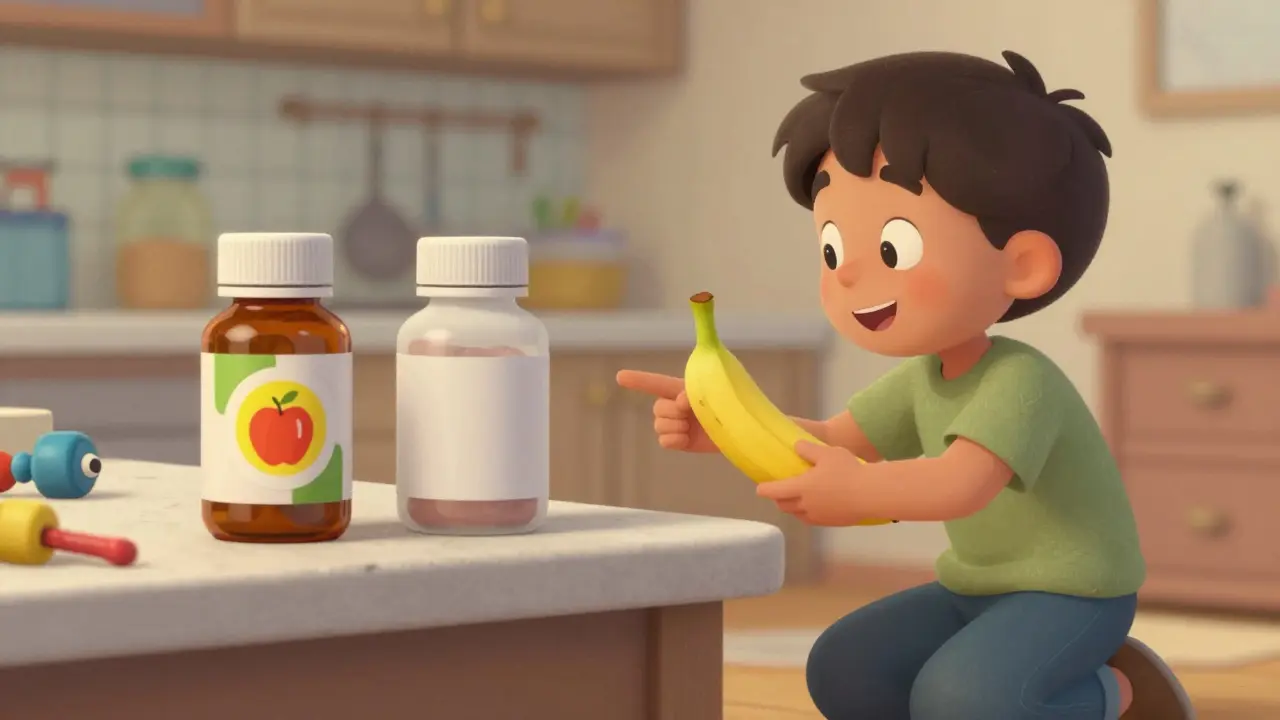
When a child gets sick, they often see a pill or liquid medicine on the table. They might ask, "Why is this one cheaper?" or "Is this the same as the one with the colorful logo?" These are smart questions - and they’re not just about cost. They’re about trust, safety, and understanding how medicine works. Teaching children about generic drugs isn’t about pharmacy jargon. It’s about giving them the tools to ask the right questions, recognize safe practices, and feel confident around medicines they’ll use for life.
What Are Generic Drugs, Really?
Generic drugs are the same as brand-name drugs in every way that matters: the active ingredient, the dose, how they work in the body, and how safe they are. The only differences are in the color, shape, or name on the bottle. For example, the generic version of ibuprofen is just as effective as Advil. The same goes for amoxicillin, which is sold under many names but does the exact same thing.
Why do they cost less? Because the company that made the original drug spent years and millions developing it. Once the patent runs out, other companies can make the same medicine without repeating all that research. They don’t need to spend on fancy ads or big logos. That savings gets passed on.
Some parents worry that generics are "weaker" or "lower quality." That’s not true. In Australia, the Therapeutic Goods Administration (TGA) checks every generic medicine before it’s sold. The same goes for the FDA in the U.S. and Health Canada. These agencies require generics to work just as well as the brand name. In fact, many hospitals use generics almost exclusively because they’re just as safe and save millions each year.
Why Teach Kids About This?
Most kids don’t know the difference between a brand name and a generic. They see the colorful packaging of a brand and think it’s better. That can lead to confusion - or even fear. A child might refuse a medicine because it looks different, even if it’s the same thing. Or worse, they might think cheaper means "not real medicine."
Teaching kids early helps them understand that medicine isn’t about branding. It’s about what’s inside. This builds critical thinking. It also helps families save money without sacrificing care. When children learn that generics are safe, they’re less likely to resist taking their medicine - even if the pill looks different.
Plus, kids hear messages everywhere: "This one is the best!" or "Only the name-brand works." Teaching them the truth helps them become smarter consumers - not just for medicine, but for everything they’ll buy in life.
How to Explain It to Young Kids (Ages 3-8)
For little ones, keep it simple and visual. Use toys or drawings to show the idea.
- Take two identical toy pills - one with a red label, one with a blue label. Say: "These both have the same medicine inside. One is called "MediPower," and one is called "SafeDose." They work the same way. The only difference is the sticker on the outside."
- Use a fruit analogy: "Think of a banana. You can buy a banana with a yellow sticker or one without. It’s still a banana. Same inside, different wrapper."
- Let them help pick the medicine at the pharmacy. Say: "We can get the one with the red label or the green one. Both are the same. Which one do you want?" This gives them control and reduces fear.
Use books like "The Medicine Bottle" by Dr. Amy K. Hsu, which shows a child learning about medicine with a friendly doctor. These stories help normalize the idea that medicine doesn’t need a fancy name to work.
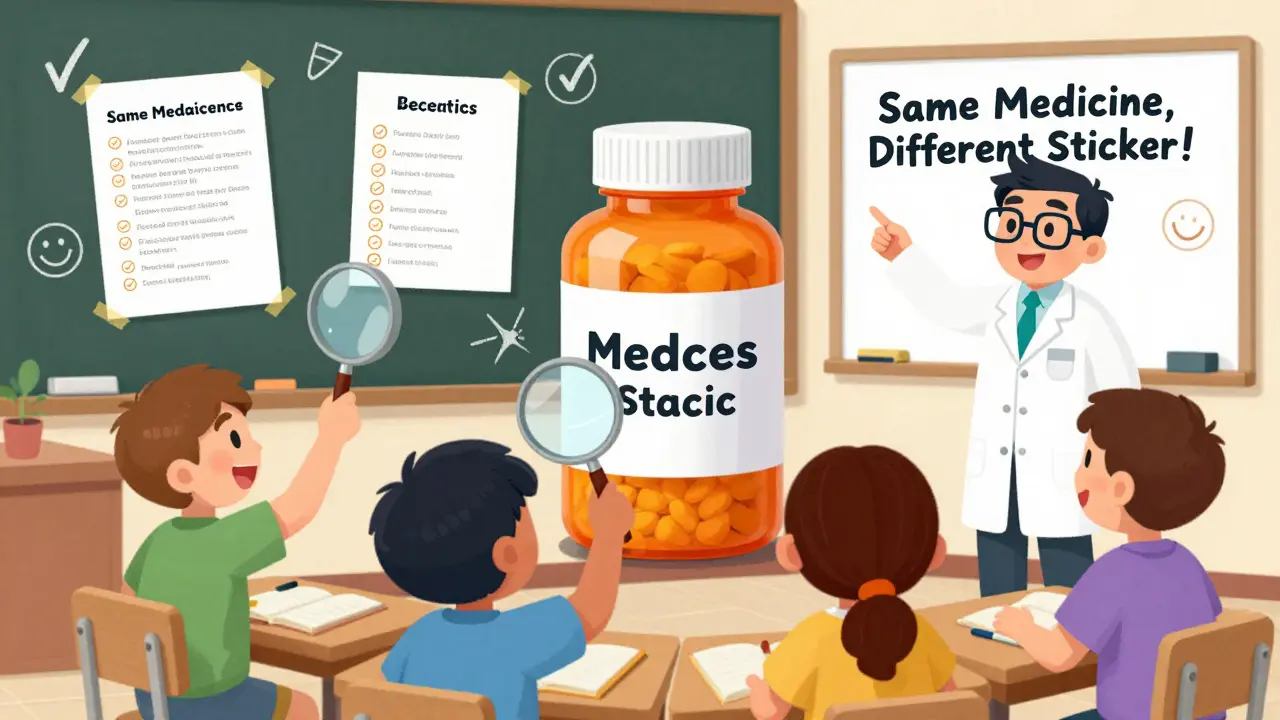
For Older Kids (Ages 9-12): Digging Deeper
Older kids can handle more detail. This is the perfect time to talk about how medicine is made and regulated.
- Explain patents: "The company that made the first version had a special right to sell it for a while. Now that time is up, others can make it too."
- Show them the TGA or FDA website (you don’t need to go deep - just look up a medicine together). Point out that both the brand and generic have the same "active ingredient" listed.
- Do a simple experiment: Compare the price of two identical medicines at the pharmacy. Let them calculate the difference. "That’s money we can use for something else - like a new book or a trip to the zoo."
- Ask them: "If two medicines do the same thing, why would one cost more?" Let them guess. Then explain: "It’s because of ads, packaging, and branding - not because it works better."
Many schools now include medicine safety in health classes. Programs like Generation Rx offer free lesson plans for grades 3-6 that use games and role-play to teach kids about generics, proper use, and what to do if they find medicine at home. These aren’t scare tactics. They’re facts wrapped in fun.
Common Myths Kids (and Adults) Believe
Here are the biggest misunderstandings - and how to fix them:
- Myth: "Generics take longer to work." Truth: They work at the same speed. The body doesn’t know the difference.
- Myth: "The generic has less medicine." Truth: The amount of active ingredient is exactly the same - within 3% of the brand name, which is the legal standard.
- Myth: "My doctor wouldn’t prescribe it if it wasn’t good." Truth: Doctors often prescribe generics on purpose because they’re just as good and cost less. Many have no preference - they just want the child to get better.
- Myth: "I’ve heard generics cause more side effects." Truth: Side effects come from the medicine inside, not the label. If a child had a reaction to the brand, they’ll likely react the same to the generic - because they’re the same drug.
Use real examples. Say: "Remember when you took the blue pill for your ear infection last month? That was a generic. You felt better in two days. The red one would’ve done the same thing."
What to Do If Your Child Refuses a Generic
Some kids resist because the pill looks different. Maybe it’s bigger, smaller, or a different color. That’s normal.
- Don’t force it. Talk first. Ask why they don’t want it.
- Let them see the box. Show them the active ingredient listed on the side.
- Offer a choice: "We can get the green one or the yellow one. Both are the same. You pick."
- Make it a game: "Let’s be medicine detectives. Can you find the name of the medicine on the label?"
- If they’re still scared, ask the pharmacist to help. Many pharmacies have child-friendly packaging options for generics.
Never lie. Don’t say, "This is the same as the red one," if it’s not. Honesty builds trust. Say: "It’s a different brand, but the medicine inside is exactly the same."
How Schools and Pharmacies Can Help
Teachers and pharmacists play a big role. Many schools now have "Medicine Safety Week" where kids learn to read labels, understand dosing, and recognize that generics are safe. Pharmacists can give kids a small, safe "medicine kit" with sample labels to play with - no real drugs involved.
Some pharmacies offer sticker charts: "Pick a generic this week, get a sticker!" Small rewards help. Others have posters with kid-friendly facts: "Same medicine. Lower price. Same result."
These efforts matter. A 2023 study in the Journal of Pediatric Pharmacy found that kids who learned about generics in school were 50% more likely to take their medicine without complaining - even if it looked different.
What Parents Can Do Today
You don’t need a degree in pharmacy to teach your child about generics. Here’s what works:
- When you pick up a prescription, say out loud: "This is the generic version. It’s cheaper, but it works just like the name-brand."
- Keep a small medicine cabinet at home with labeled bottles - brand and generic side by side. Let your child look at them.
- Ask your pharmacist: "Do you have any kid-friendly materials about generics?" Most do.
- Use everyday moments: "We’re buying the generic laundry detergent too - same clean, less money. Medicine’s the same way."
- Watch for misinformation. If your child says, "My friend’s mom says generics are fake," gently correct it: "No, they’re real. They just don’t have a big logo."
The goal isn’t to turn your child into a pharmacist. It’s to give them confidence. When they grow up, they’ll know how to ask questions, compare prices, and not be fooled by marketing. That’s a skill that lasts a lifetime.
What’s Next? Building Lifelong Health Literacy
Teaching kids about generic drugs is just one piece of medicine literacy. Next, they’ll learn about dosing, side effects, storage, and what to do if they find medicine they didn’t ask for. All of this ties into a bigger picture: understanding their own body and how to stay healthy.
By starting early - with simple, honest, and calm conversations - you’re not just teaching about pills. You’re teaching them to think critically, question what they’re told, and make smart choices. That’s the real medicine.
Are generic drugs safe for children?
Yes, generic drugs are just as safe for children as brand-name drugs. Regulatory agencies like Australia’s TGA and the U.S. FDA require generics to have the same active ingredient, strength, dosage form, and performance as the original. They go through the same safety testing. The only differences are in color, shape, or inactive ingredients - none of which affect how well the medicine works.
Why do generic drugs look different?
Generic drugs look different because the original company owns the trademark for the brand name, color, and shape. By law, generics must look different to avoid confusion. But the medicine inside is identical. A blue pill and a white pill can both contain the same dose of amoxicillin - they just have different coatings or markings.
Can I switch from a brand-name drug to a generic without asking the doctor?
In most cases, yes - pharmacists can substitute generics unless the doctor specifically writes "dispense as written" or "no substitution." Always check with your pharmacist or doctor if you’re unsure. But for most common medications like antibiotics, pain relievers, or asthma inhalers, switching to generic is safe and standard practice.
Do generics work slower than brand-name drugs?
No. Generics are required to be absorbed into the body at the same rate and to the same extent as the brand-name version. If a child takes a generic ibuprofen, it will start working in the same time - usually 20 to 30 minutes - as the brand-name version. The body doesn’t distinguish between them.
How can I help my child feel comfortable taking a generic medicine?
Talk openly about it. Show them the label and point out the active ingredient. Let them pick between two generic options if available. Use simple analogies like "same juice, different bottle." Make it a positive experience - praise them for being brave or smart. If they’re still nervous, ask the pharmacist for a child-friendly version or a flavor option. Many generics now come in fruit flavors or chewable forms.
If your child is taking a medicine regularly, keep a simple chart at home: medicine name, dose, time, and whether it was brand or generic. This helps track how they respond and builds their awareness over time. The more familiar they are with medicine, the less scary it becomes.


Comments (8)