
The Purple Book isn’t a novel you read for fun-it’s the FDA’s official, searchable database that tells you exactly which biological drugs are approved, which ones are biosimilars, and which ones can be swapped out like generics. If you’re a pharmacist, a prescriber, or even a patient trying to understand why your insulin changed, this is the document that holds the answers.
What Is the Purple Book, Really?
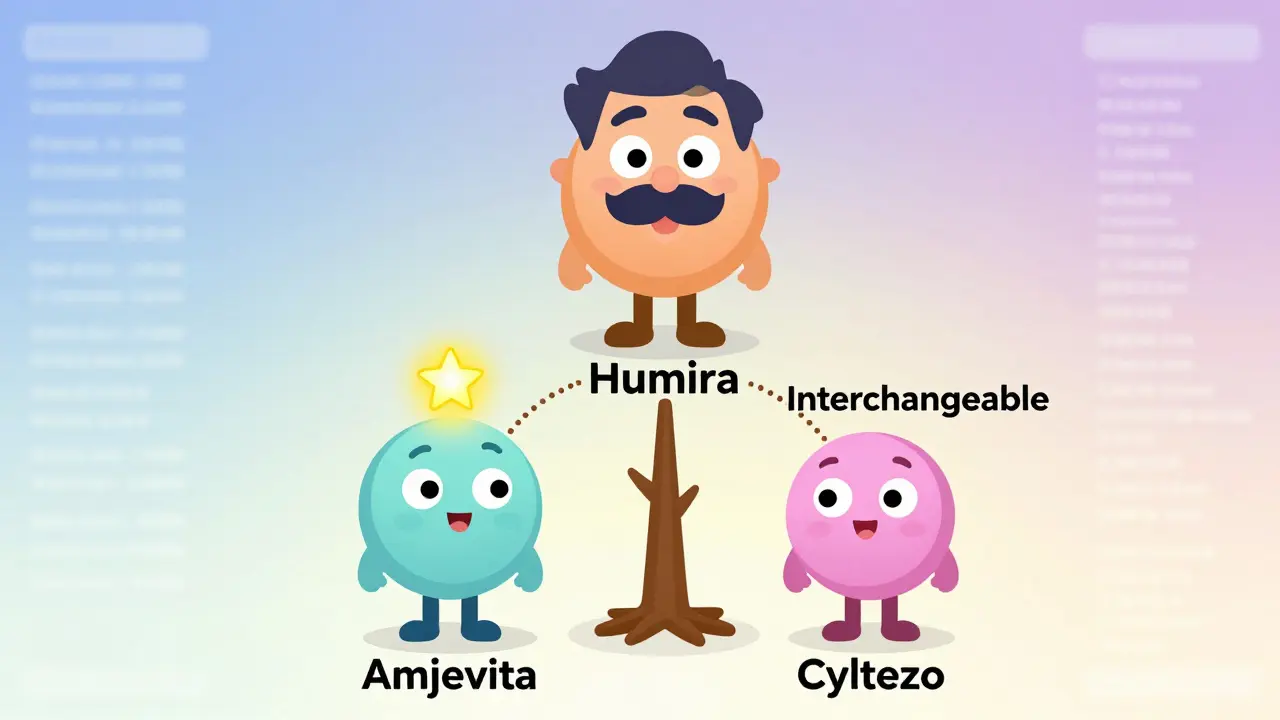
The Purple Book is a living, updated database run by the U.S. Food and Drug Administration. It doesn’t just list drugs-it shows relationships. Think of it like a family tree for biological medicines. At the top is the original brand-name biologic, called the reference product. Below it, you’ll find any biosimilars approved to copy it, and even fewer that are labeled interchangeable.
Before 2020, this information was split across two separate lists-one for drugs managed by CDER (like insulin and monoclonal antibodies) and another for CBER products (like vaccines and cell therapies). That made it messy. Now, everything’s in one place. You can search by brand name, active ingredient, or manufacturer and instantly see which products are linked.
Each product card is color-coded. If two products share the same color, they’re connected. One might be the original Humira. Another might be a biosimilar. A third, with the same color and a special icon, might be interchangeable. No guesswork. No confusion.
Biosimilar vs. Interchangeable: The Difference That Matters
Here’s where people get tripped up: all interchangeable products are biosimilars, but not all biosimilars are interchangeable.
A biosimilar is a biological product that’s highly similar to its reference drug-no clinically meaningful differences in safety, purity, or potency. That’s it. It’s been tested, approved, and proven to work the same way. You can prescribe it. Your doctor can switch you to it. But a pharmacist? They can’t automatically swap it unless the FDA says it’s interchangeable.
An interchangeable product goes further. It has to prove something extra: that switching back and forth between it and the original drug-multiple times, over weeks or months-doesn’t increase risk or reduce effectiveness. Imagine a diabetic patient who starts on an interchangeable insulin. Then, next month, they’re switched back to the brand. Then again. And again. The FDA requires data showing that each switch is safe. That’s not required for regular biosimilars.
This isn’t about being better. It’s about predictability. The FDA is clear: interchangeability doesn’t mean the drug is safer or more effective. It just means you can swap it without needing a new prescription every time.
Why Does Interchangeability Even Exist?
The goal of the Purple Book isn’t just transparency-it’s to lower costs. Biologics are expensive. Humira, for example, cost over $70,000 a year before biosimilars entered the market. Biosimilars can cut that by 15-35%. Interchangeables? They can drive prices even lower because pharmacists can substitute them without waiting for doctor approval.
But here’s the catch: the FDA gives the green light for interchangeability. States decide if pharmacists can actually use it.
As of 2023, 47 states and Puerto Rico let pharmacists substitute interchangeable biosimilars without contacting the prescriber. That’s huge. But in the other three states? The pharmacist has to call the doctor, get permission, or notify the patient in writing. Some states even require documentation in the patient’s record. That slows things down. It creates inconsistency. A patient in New York might get a switch automatically. One in California might need a phone call. And in a state that doesn’t allow substitution at all? They can’t use the interchangeable label.
This patchwork system is why some companies hesitate to pursue interchangeability. It’s expensive to run the extra clinical trials. If the state won’t let pharmacists use it, the market advantage shrinks.

What’s Actually in the Purple Book?
Every entry includes key facts:
- The product’s FDA approval date under section 351(a) (reference) or 351(k) (biosimilar/interchangeable)
- Whether it’s protected by exclusivity (meaning no biosimilars can enter for a set time)
- Its designation: 351(a), 351(k) Biosimilar, or 351(k) Interchangeable
- Brand and generic names
- Delivery method icons (autoinjector, prefilled syringe, IV bag)
For example, if you search for “adalimumab,” you’ll see Humira as the reference. Then you’ll see at least five biosimilars-Amjevita, Cyltezo, Hyrimoz, and others-all listed under it. Of those, two might be marked as interchangeable. Click on the interchangeable ones, and you’ll see the clinical data summary the FDA used to make that call.
It’s not just for doctors. Pharmacists use it daily to check if they can swap a drug. Patients can look it up to understand why their medication changed. Even insurers use it to decide which drugs to cover.
How Many Interchangeables Are There?
As of late 2023, only seven biosimilars had received the interchangeable designation from the FDA.
Two are insulins: Basaglar and a version of Lantus. Three treat inflammatory diseases like rheumatoid arthritis and Crohn’s disease. Two are for eye conditions-specifically, treatments for macular degeneration.
That’s not a lot. But it’s growing. More companies are applying. The FDA has issued draft guidance on labeling to make sure everyone understands what “interchangeable” really means on the package. That’s a sign they’re preparing for more approvals.
Insulin is a big focus. It’s one of the most prescribed biologics in the U.S. And because it’s used daily, the ability to switch without a new prescription could save patients hundreds a month. That’s why the first interchangeable insulins were such a milestone.
What the Purple Book Doesn’t Tell You
It won’t tell you about pricing. It won’t tell you if your insurance covers it. It won’t tell you if your pharmacy has stock.
It also doesn’t list “unbranded biologics”-products that are equivalent to the brand but never went through the 351(k) pathway. These aren’t biosimilars. They’re not interchangeable. And they’re not in the Purple Book. That’s intentional. The FDA wants to keep the list clean: only products that have passed their rigorous review process.
And it won’t explain state laws. You have to check your state’s pharmacy board website for that. The Purple Book gives you the federal status. You need to do your own homework for local rules.
Who Uses the Purple Book-and Why?
Pharmacists use it to know if they can substitute. If a patient walks in with a prescription for Enbrel and a biosimilar is available but not interchangeable? They can’t swap it. If it’s interchangeable? They can, unless their state says otherwise.
Doctors use it to understand their options. They can see which biosimilars are available and whether they’ve been proven safe for switching. That helps them make informed decisions when recommending alternatives.
Patients can use it to ask smart questions. If they’re told they’re switching to a new drug, they can check the Purple Book to see if it’s interchangeable-and if that means they can get it without a new script.
Insurers and PBMs use it to build formularies. If a drug is interchangeable, they’re more likely to push it as the default option to cut costs.
Even researchers use it to track how many biosimilars are entering the market, which ones are getting interchangeable status, and how fast.
What’s Next for the Purple Book?
The FDA plans to keep updating it. More biosimilars are coming. More will seek interchangeability. Biologics for rare diseases, cancer treatments, and autoimmune conditions are all in the pipeline.
But the real challenge isn’t science-it’s implementation. Even if a drug is interchangeable, if pharmacists don’t know how to use the Purple Book, or if state laws make substitution too complicated, the potential savings won’t be realized.
The Purple Book is a tool. It’s not magic. But it’s the best one we have to bring transparency to a complex, high-cost part of medicine. The more people understand it, the more it can help lower drug prices and improve access.
Is the Purple Book only for U.S. drugs?
Yes. The Purple Book is maintained by the U.S. Food and Drug Administration and only includes biological products approved for sale in the United States. Other countries have their own databases-for example, the European Medicines Agency (EMA) publishes a list of biosimilars in the EU, but it doesn’t use the same interchangeability framework.
Can a pharmacist substitute a biosimilar without a doctor’s approval?
Only if the biosimilar is designated as interchangeable by the FDA and your state allows substitution without prescriber permission. In most states, pharmacists can swap interchangeable biosimilars like generics. But for non-interchangeable biosimilars, the pharmacist must contact the prescriber before switching.
Are interchangeable biosimilars safer than regular biosimilars?
No. The FDA is clear: interchangeability doesn’t mean the drug is safer or more effective. It only means it has been tested to show that switching back and forth between it and the original drug doesn’t increase risks. Both types are equally safe and effective when used as directed.
How often does the FDA update the Purple Book?
The Purple Book is updated monthly. When a new biosimilar or interchangeable product is approved, it’s added within weeks. The FDA also updates product designations if exclusivity periods expire or if a product is withdrawn from the market.
Can I use the Purple Book to find cheaper alternatives to my biologic?
Yes. Search your brand-name biologic in the Purple Book. You’ll see all approved biosimilars and interchangeable versions. Then, talk to your doctor or pharmacist about whether switching is an option. Keep in mind that insurance coverage and pharmacy stock can vary, so even if a cheaper option exists, it might not be immediately available.
Do biosimilars have the same side effects as the original drug?
Yes. The FDA requires biosimilars to have no clinically meaningful differences in safety or side effects compared to the reference product. Clinical trials and post-market monitoring show that side effect profiles are nearly identical. Minor differences in inactive ingredients (like preservatives) don’t affect how the drug works or how your body reacts to it.


Comments (12)