
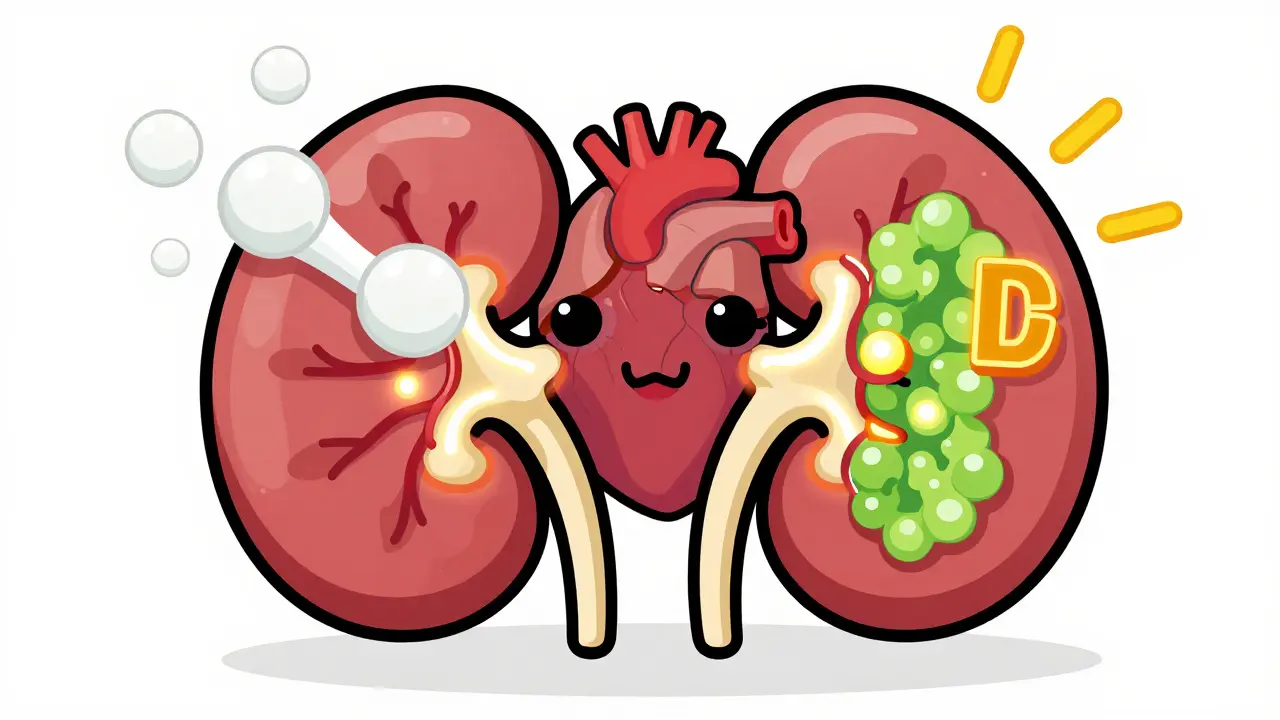
When your kidneys aren't working well, they can't balance minerals like calcium, phosphate, and vitamin D properly. This leads to a condition called CKD-MBD (Chronic Kidney Disease-Mineral and Bone Disorder), which affects over 90% of people with moderate to severe kidney damage. Left unchecked, it can cause fragile bones and dangerous calcium buildup in blood vessels. Let's unpack what this means and how to manage it.
What is CKD-MBD?
CKD-MBD isn't just a bone problem. It's a systemic disorder where kidney disease disrupts the balance of minerals and hormones throughout your body. Before 2006, doctors called this 'renal osteodystrophy,' but we now know it involves more than bones-it includes blood vessel calcification and heart risks too. The Kidney Disease: Improving Global Outcomes (KDIGO) group redefined it to reflect this broader impact.
How kidneys manage minerals
Your kidneys do more than filter waste. They activate vitamin D, control phosphate levels, and help regulate parathyroid hormone (PTH). When kidney function drops below 60% (Stage 3 CKD), this system starts to fail. Phosphate builds up because kidneys can't flush it out. This triggers a chain reaction: fibroblast growth factor-23 (FGF23) skyrockets, vitamin D activation drops, and calcium levels fall. The body then overproduces PTH to compensate, but this only worsens the problem.
Calcium: The balancing act
Calcium is essential for bones, nerves, and heart function. But in CKD, low calcium becomes a big issue. As kidney damage progresses, less active vitamin D means less calcium absorbed from food. This triggers PTH to pull calcium from bones, weakening them. High calcium levels from supplements can also be dangerous-they may cause calcium deposits in blood vessels. Doctors aim to keep blood calcium between 8.4 and 10.2 mg/dL to avoid both extremes.
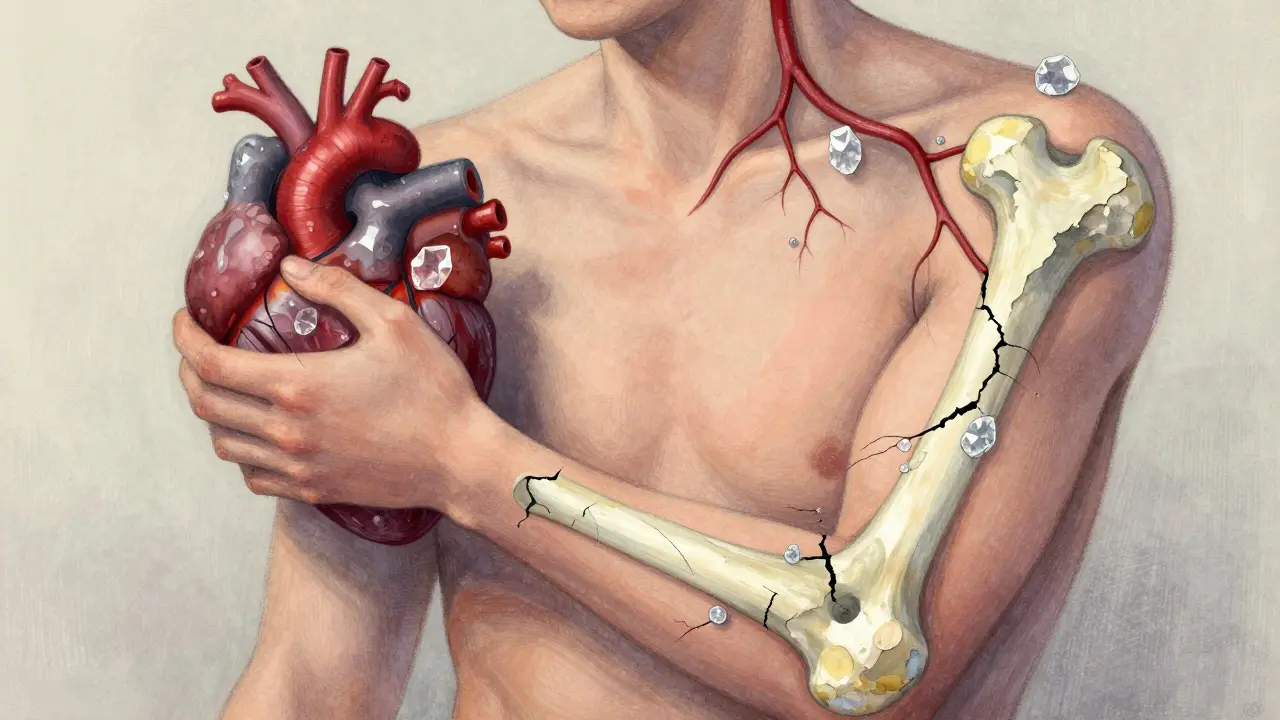
PTH: The hormone that goes rogue
Parathyroid Hormone (PTH) normally keeps calcium in check. But in CKD, it becomes overactive. High PTH levels (above 70 pg/mL in Stage 3) make bones release calcium, leading to fractures. Yet, the bones also become resistant to PTH, creating a confusing state where high PTH doesn't fix the problem. This 'functional hypoparathyroidism' is why simply lowering PTH isn't enough-it's about balancing the whole system.
Vitamin D: The missing piece
Vitamin D is crucial for calcium absorption. Kidneys convert inactive vitamin D into active calcitriol. In CKD, this conversion drops by 50-80% by Stage 4. This causes low calcium and high PTH. While supplements help, active forms like calcitriol must be used carefully-they can raise calcium and phosphate too much. Recent studies show regular vitamin D (cholecalciferol) reduces mortality risk by 15% without the side effects of stronger analogs.
Symptoms and dangers
CKD-MBD doesn't always have obvious symptoms. But the risks are severe. People with dialysis have 4-5 times higher hip fracture risk. Vascular calcification progresses 15-20% faster in these patients, contributing to half of all cardiovascular deaths. Each 1 mg/dL increase in phosphate raises death risk by 18%. Even subtle imbalances matter-low vitamin D (below 20 ng/mL) affects 80-90% of CKD patients and increases mortality by 30%.

Diagnosis: Blood tests and beyond
Doctors check blood levels of calcium, phosphate, PTH, and vitamin D regularly. Target ranges vary by CKD stage: phosphate should be 2.7-4.6 mg/dL for early stages, 3.5-5.5 for dialysis. PTH targets are 2-9 times the upper normal limit. Bone biopsies are the gold standard but rare-most rely on blood markers. Imaging like CT scans can detect vascular calcification, present in 80% of dialysis patients.
Treatment strategies
Managing CKD-MBD requires a multi-pronged approach:
- Phosphate control: Limit high-phosphate foods (processed meats, soda) and use binders like sevelamer or lanthanum carbonate to block absorption.
- Vitamin D: Start with nutritional vitamin D (1000-4000 IU/day) to reach levels above 30 ng/mL. Active forms are reserved for severe PTH elevation.
- Calcium management: Avoid excessive calcium supplements-stick to 1500 mg elemental calcium max daily to prevent vessel calcification.
- Calcimimetics: Drugs like cinacalcet or etelcalcetide reduce PTH without raising calcium or phosphate, used for severe hyperparathyroidism.
Recent research shows aggressive phosphate lowering isn't always better-too strict targets can cause malnutrition. Balance is key.
Key takeaways
CKD-MBD is a complex syndrome where mineral imbalances affect bones and blood vessels. Early intervention in Stage 3 CKD is critical-FGF23 rises years before phosphate spikes. Work with your healthcare team to monitor blood levels regularly. Treatment focuses on balancing all components: phosphate, calcium, PTH, and vitamin D. Small changes in diet and medication can significantly reduce fracture and heart risks.
What is CKD-MBD?
CKD-MBD (Chronic Kidney Disease-Mineral and Bone Disorder) is a systemic condition where kidney disease disrupts mineral and hormone balance, affecting bones, blood vessels, and heart health. It's more than just bone disease-it involves calcium, phosphate, parathyroid hormone (PTH), and vitamin D imbalances that can lead to fractures and cardiovascular complications.
How does kidney disease affect calcium levels?
Kidneys help activate vitamin D, which is needed for calcium absorption. When kidney function declines, less vitamin D is activated, leading to low calcium. The body then pulls calcium from bones to compensate, weakening them. High calcium from supplements can also cause dangerous calcium deposits in blood vessels, so levels must be carefully managed between 8.4-10.2 mg/dL.
Why is PTH important in CKD?
Parathyroid hormone (PTH) normally regulates calcium. In CKD, low calcium and high phosphate trigger excessive PTH production. However, bones become resistant to PTH, leading to a situation where high PTH doesn't fix calcium levels but still damages bones. This 'secondary hyperparathyroidism' is a key driver of bone disease and vascular calcification in kidney patients.
What role does vitamin D play in CKD?
Vitamin D is essential for calcium absorption and bone health. Kidneys convert inactive vitamin D to its active form (calcitriol), which is impaired in CKD. This leads to low calcium, high PTH, and bone weakness. Supplementing with nutritional vitamin D (cholecalciferol) is often safer than active analogs, reducing mortality risk by 15% without causing hypercalcemia.
How is CKD-MBD diagnosed?
Diagnosis involves regular blood tests for calcium, phosphate, PTH, and vitamin D levels. Target ranges depend on CKD stage-phosphate should be 2.7-4.6 mg/dL for early stages and 3.5-5.5 mg/dL for dialysis patients. Bone biopsies are the gold standard but rarely used; instead, doctors rely on blood markers and imaging like CT scans to detect vascular calcification.
What are the treatment options for CKD-MBD?
Treatment includes phosphate binders to limit absorption, nutritional vitamin D supplements to reach levels above 30 ng/mL, calcium management (max 1500 mg elemental calcium daily), and calcimimetics like cinacalcet for severe PTH elevation. Diet changes-avoiding high-phosphate foods-and careful medication dosing are crucial to balance all mineral components without causing harm.
Can diet help manage CKD-MBD?
Yes, diet plays a major role. Limiting phosphate-rich foods like processed meats, soda, and dairy can help control phosphate levels. However, overly strict diets may cause malnutrition, so work with a dietitian to find the right balance. For calcium, focus on natural sources like leafy greens instead of supplements unless prescribed. Vitamin D intake from sunlight and fortified foods also supports overall mineral health.
What's the connection between CKD-MBD and heart disease?
Vascular calcification is a major link. High phosphate and calcium deposits in blood vessels stiffen arteries, increasing heart attack and stroke risk. In dialysis patients, 80% show significant vascular calcification, contributing to 50% of cardiovascular deaths. Managing phosphate and calcium levels through diet, binders, and medications is critical to reducing this risk.
How often should I get tested for mineral levels?
KDIGO guidelines recommend checking phosphate and calcium every 3-6 months for Stage 3-4 CKD and monthly for dialysis patients. PTH should be tested every 3 months in early stages and monthly in advanced disease. Vitamin D levels should be checked at least once a year. Early detection allows timely adjustments to prevent complications.
Are phosphate binders safe?
Phosphate binders are generally safe but have risks. Calcium-based binders can cause vascular calcification if overused-limit to 1500 mg elemental calcium daily. Non-calcium binders like sevelamer or lanthanum carbonate are safer for long-term use but may cause digestive issues. Always take them with meals as directed and discuss side effects with your doctor.


Comments (15)