
HAS-BLED Bleeding Risk Calculator
The HAS-BLED score is a clinical tool doctors use to assess bleeding risk for patients taking warfarin. Each factor contributes 1 point to your total score. Higher scores indicate greater risk of bleeding complications.
Score interpretation:
- 0-2 points: Low risk - Low bleeding risk
- 3-4 points: Moderate risk - Moderate bleeding risk
- 5 or more points: High risk - High bleeding risk
What the factors mean:
Hypertension - High blood pressure (systolic >160 mmHg)
Abnormal renal or liver function - Kidney or liver problems that affect how warfarin works
Stroke - History of stroke or brain hemorrhage
Bleeding history - Past history of serious bleeding episodes
Labile INR - INR levels that fluctuate significantly
Age >65 years - Advanced age increases bleeding risk
Drugs or alcohol concomitantly - Taking other medications or alcohol that increase bleeding risk
Warfarin has been used for over 70 years to prevent dangerous blood clots. It’s one of the most common blood thinners prescribed for conditions like atrial fibrillation, deep vein thrombosis, and mechanical heart valves. But while it works, it’s not safe for everyone-and the biggest danger isn’t a mystery: bleeding. If you’re on warfarin, you need to know what signs to watch for, what increases your risk, and what to do if something goes wrong.
Why Warfarin Works-and Why It’s Dangerous
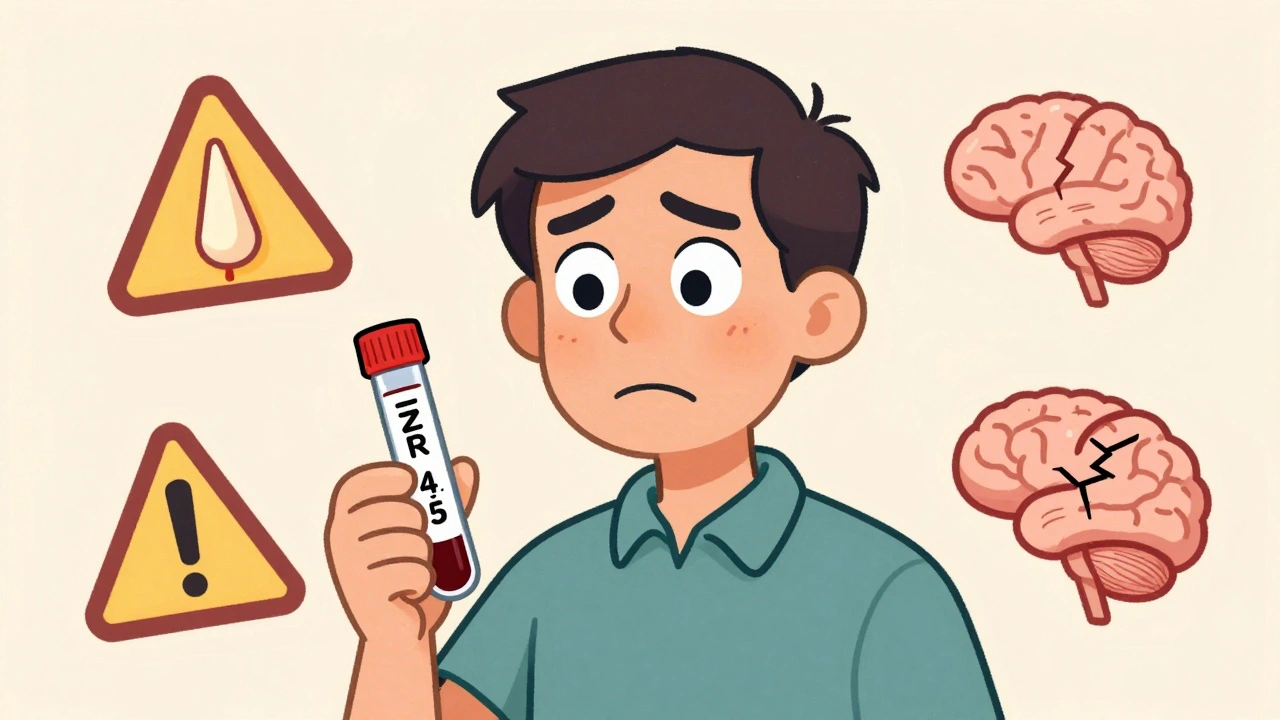
Warfarin stops your blood from clotting too easily by blocking vitamin K, which your body needs to make clotting proteins. That’s helpful if you’re at risk for stroke or clots. But it also means even a small bump or cut can turn into something serious. Unlike newer blood thinners, warfarin doesn’t have a built-in safety net. You can’t just take it and forget it. You need regular blood tests-called INR checks-to make sure your dose is just right.The ideal INR range is usually between 2.0 and 3.0. If your INR is below that, you’re not protected enough from clots. If it’s above 3.0, your bleeding risk starts climbing fast. For every point your INR rises above 3.0, your chance of a major bleed doubles. At an INR of 4.0 or higher, the risk jumps 4 to 8 times compared to being in range.
What Bleeding Looks Like-And When to Panic
Not all bleeding is obvious. Some signs are easy to miss. Others are life-threatening.Minor bleeding: Nosebleeds that last more than 5 minutes, bleeding gums when brushing your teeth, or unexplained bruising (especially large purple patches) are red flags. These don’t always mean an emergency-but they do mean you should call your doctor.
Major bleeding: This is when you need to go to the hospital immediately. Look for:
- Red, pink, or brown urine
- Black, tarry, or bloody stools
- Coughing up blood or vomiting material that looks like coffee grounds
- Sudden, severe headache or dizziness (could mean bleeding in the brain)
- Severe back or abdominal pain
- Unusually heavy vaginal bleeding
- Swelling, pain, or warmth in a limb (could be internal bleeding)
One of the most dangerous complications is intracranial hemorrhage-bleeding in the brain. It happens in about 0.2% to 0.5% of warfarin users each year. But when it does, it’s often fatal if not treated within an hour. That’s why knowing these signs isn’t optional-it’s survival.
Who’s at Highest Risk?
Not everyone on warfarin will bleed. But some people are much more likely to. The FDA and medical guidelines list clear risk factors:- Age 65 or older
- History of stomach bleeding
- High blood pressure
- Previous stroke or brain injury
- Severe kidney disease
- Cancer
- Anemia
If you have just one of these, your risk goes up. If you have three or more, your chance of a major bleed in a year can hit 20%. That’s why doctors use tools like the HAS-BLED score to assess your personal risk before starting warfarin.
Other Side Effects You Might Not Know About
Bleeding is the big one-but it’s not the only one. Warfarin can cause rare but serious problems:- Warfarin-induced skin necrosis: A rare condition where skin turns black and dies, usually within days of starting the drug. It’s linked to low protein C levels and can be life-threatening.
- Purple toe syndrome: Your toes turn purple, often 3 to 8 weeks after starting warfarin. It’s caused by cholesterol crystals blocking tiny blood vessels.
- Calciphylaxis: Calcium builds up in blood vessels, causing painful skin ulcers. This mostly happens in people with kidney failure.
- Stomach upset: Nausea, vomiting, bloating, or a weird taste in your mouth are common but usually mild.
These are rare-but if you notice anything unusual after starting warfarin, don’t ignore it. Tell your doctor.
What You Can Do to Stay Safe
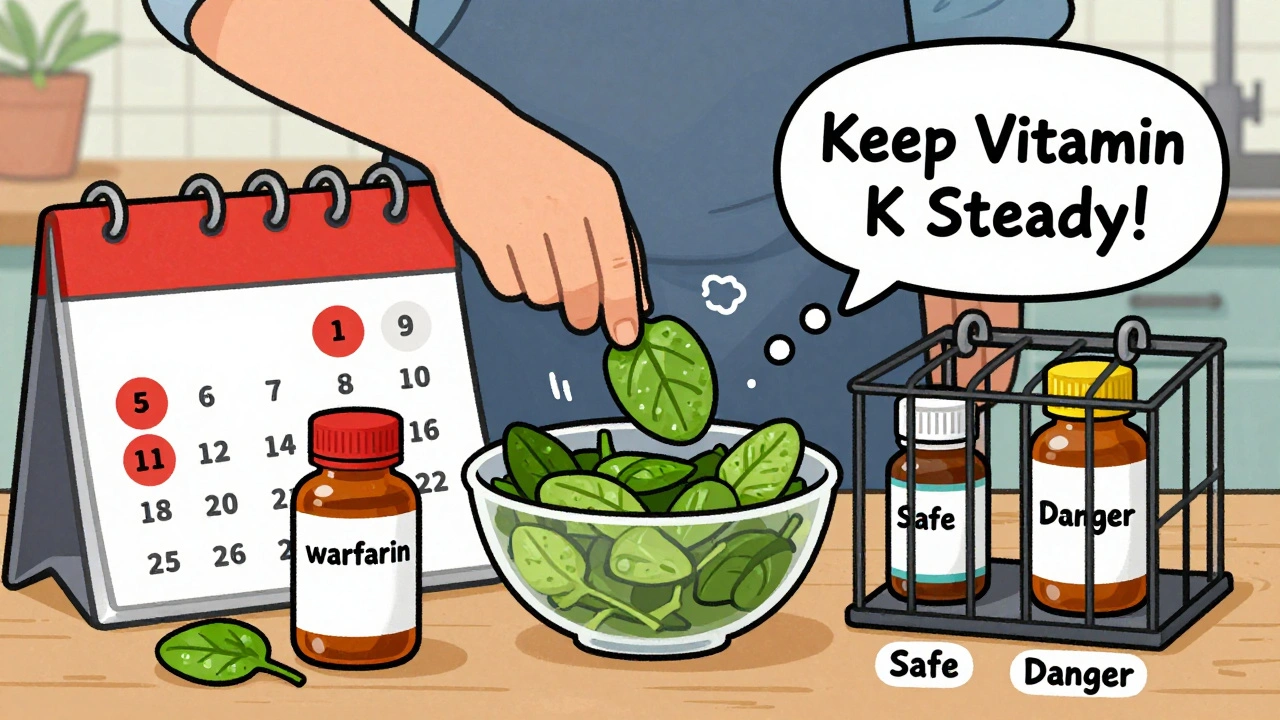
You can’t avoid all risks-but you can cut them in half by following a few simple rules.1. Get your INR tested regularly. If you’re stable, every 4 weeks is standard. But if your dose just changed, or you’ve been sick, you might need weekly checks. The goal is to stay in range as much as possible. Patients who keep their INR in range 70% of the time cut their bleeding risk by 60%.
2. Watch your diet. Vitamin K makes warfarin less effective. Leafy greens like spinach, kale, and broccoli are packed with it. You don’t have to avoid them-but you need to eat about the same amount every week. A sudden big bowl of salad one day and none the next can send your INR crashing. Aim for 60-80 mcg of vitamin K daily. Keep it steady.
3. Avoid NSAIDs. Ibuprofen, naproxen, and even aspirin can double your risk of stomach bleeding when taken with warfarin. Use acetaminophen (Tylenol) instead for pain or fever-unless your doctor says otherwise.
4. Be gentle with your body. Use an electric razor, not a blade. Brush your teeth with a soft-bristle brush. Floss with waxed floss. Avoid contact sports, skiing, or anything where you could fall hard. Even a minor head injury can turn dangerous.
5. Tell every doctor you see. Over 300 medications and supplements interact with warfarin. That includes antibiotics, antifungals, herbal products like St. John’s wort, and even some vitamins. Always check with your pharmacist or doctor before starting anything new.
What to Do If You Bleed
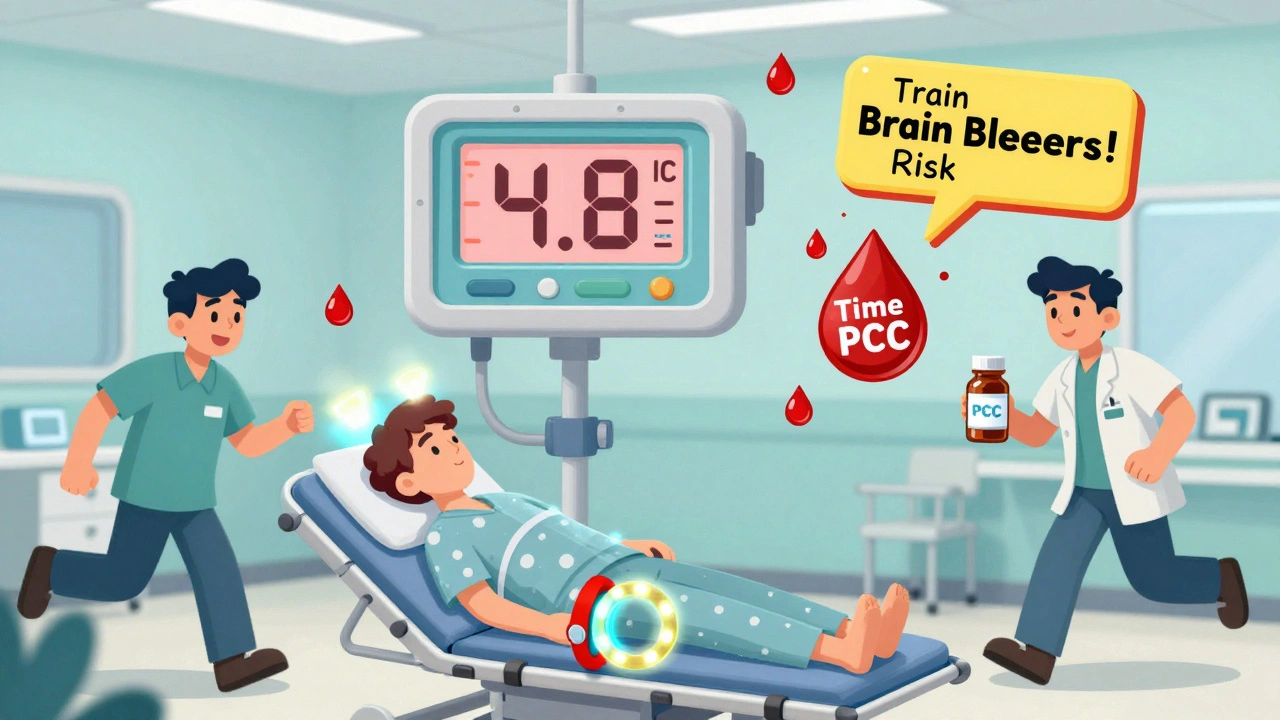
If you have minor bleeding-like a nosebleed that stops after 5 minutes of pressure-call your doctor. Don’t wait. If you have major bleeding symptoms, go to the ER immediately. Don’t drive yourself if you’re dizzy or weak.In the hospital, they’ll check your INR right away. If it’s too high, they’ll reverse the warfarin. For life-threatening bleeding, they’ll give you vitamin K by IV and a clotting factor concentrate called PCC (prothrombin complex concentrate). Fresh frozen plasma is used if PCC isn’t available. Time matters. For brain bleeds, reversal should happen within 30 to 60 minutes.
Is There a Better Option?
Newer blood thinners-called DOACs (direct oral anticoagulants)-like apixaban, rivaroxaban, and dabigatran, are now preferred for most people. Why? They don’t need INR checks, have fewer food interactions, and cause about 30% fewer major bleeds than warfarin.But warfarin still has its place. If you have a mechanical heart valve-especially in the mitral position-warfarin is still the only option. It’s also used in severe kidney disease, where DOACs can build up dangerously. And it’s cheap: generic warfarin costs about $4 to $10 a month.
If you’re new to anticoagulation, ask your doctor if a DOAC might be right for you. If you’ve been on warfarin for years and it’s working fine, don’t switch unless there’s a good reason.
Carry Proof You’re on Warfarin
Wear a medical alert bracelet or carry a card that says: “On Warfarin. Risk of Bleeding.” This could save your life if you’re found unconscious after a fall. Emergency responders need to know immediately so they can reverse the drug fast.Some hospitals now use digital alerts linked to your medical record, but a physical ID is still the fastest way to get help in an emergency.
Final Thought: It’s Not About Fear-It’s About Control
Warfarin isn’t a drug you take blindly. It’s a tool that requires attention. The same people who bleed on warfarin are often the ones who skip their INR tests, change their diet without telling anyone, or ignore early signs of bleeding.If you’re on warfarin, you’re not just a patient-you’re a manager of your own safety. Keep your appointments. Track your diet. Know your signs. Speak up when something feels off. The goal isn’t to live in fear. It’s to live well-with the confidence that you’re in control.
Can I drink alcohol while taking warfarin?
Moderate alcohol use (one drink per day) is usually okay, but heavy drinking can increase your bleeding risk and interfere with how warfarin works. Alcohol can raise your INR, especially if you binge drink or drink regularly. If you drink, keep it consistent-don’t switch from daily to none, or vice versa. Always tell your doctor how much you drink.
Can I take aspirin with warfarin?
No-not unless your doctor specifically tells you to. Aspirin is an NSAID and increases your risk of stomach bleeding when combined with warfarin. Even low-dose aspirin (81 mg) can raise your bleeding risk by 2 to 4 times. Never start aspirin on your own. If you’re on warfarin for atrial fibrillation, aspirin doesn’t add any benefit and only adds risk.
Do I need to stop warfarin before dental work?
For most routine dental procedures-cleanings, fillings, simple extractions-you should keep taking warfarin. Stopping increases your risk of a clot more than the small chance of bleeding. Your dentist can use special techniques like gauze, sutures, or hemostatic agents to control bleeding. Only stop warfarin for major oral surgery, and only if your doctor says so. Never stop it yourself.
What happens if I miss a dose of warfarin?
If you miss a dose, take it as soon as you remember the same day. If you don’t remember until the next day, skip the missed dose and go back to your regular schedule. Never double up. Missing doses can cause your INR to drop, raising your risk of clots. If you miss more than one dose, call your doctor. Keep a log of missed doses to show at your next INR check.
Can I get a flu shot while on warfarin?
Yes. Flu shots are safe and recommended for people on warfarin. Use a needle, not a nasal spray. After the shot, apply pressure for at least 2 minutes to prevent bruising. If you’re prone to bruising, ask your doctor if you should take acetaminophen beforehand to reduce soreness.
Is warfarin safe during pregnancy?
No. Warfarin can cross the placenta and cause serious birth defects, especially in the first trimester. It’s also linked to fetal bleeding. If you’re pregnant or planning to be, talk to your doctor right away. Heparin or low-molecular-weight heparin (like enoxaparin) are safer alternatives during pregnancy. Do not stop warfarin without medical advice-stopping suddenly can cause a clot.
Next Steps: What to Do Today
If you’re on warfarin:- Check your next INR appointment date. Mark it on your calendar.
- Review your diet. Are you eating the same amount of leafy greens each week?
- Look at your medicine cabinet. Are you taking any new supplements, painkillers, or herbal products? Check with your pharmacist.
- Wear or carry a medical alert ID if you don’t already.
- Write down any unusual bruising, bleeding, or symptoms. Bring them to your next appointment.
Warfarin isn’t going away. But with the right knowledge, you can take it safely-and live without fear.


Comments (13)