
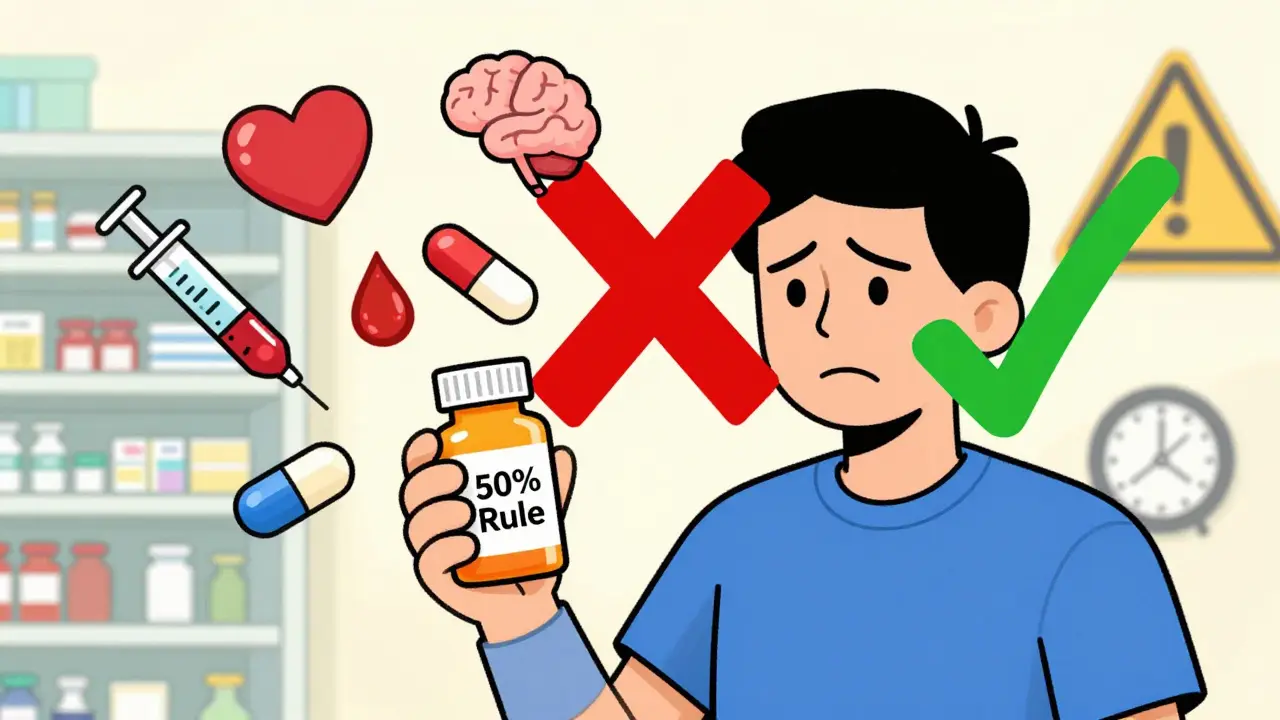
Missed Dose Decision Tree
This tool provides guidance on what to do if you miss a medication dose based on the type of drug and timing. Always consult your healthcare provider for personalized advice.
Missing a dose of your medication isn’t just a slip-up-it can trigger serious health risks. For some drugs, skipping one pill might mean a seizure. For others, it could send your blood sugar crashing or trigger a dangerous clot. Yet most people don’t know what to do when they forget. Generic advice like "take it as soon as you remember" is dangerously vague. The truth? What to do after a missed dose depends entirely on the medication. There’s no one-size-fits-all rule. This guide breaks down exactly what to do based on the type of drug you’re taking, using real clinical protocols from U.S. and international health authorities.
Anticoagulants: Warfarin vs. DOACs
If you take warfarin (Coumadin), timing is everything. If you realize you missed your dose before midnight, take it right away. If it’s already past midnight? Skip it. Never double up. Warfarin affects your blood’s clotting ability, and too much can cause internal bleeding. The UK’s National Health Service and the Scottish Patient Safety Programme both confirm this: 97% of anticoagulation clinics follow this exact protocol. The danger isn’t just from missing a dose-it’s from trying to fix it.
Direct oral anticoagulants (DOACs) like apixaban (Eliquis) or rivaroxaban (Xarelto) work differently. If you miss a dose and remember within 6 hours of your scheduled time, take it. If it’s been longer than half the dosing interval-for example, more than 12 hours for a twice-daily pill-skip it. Doubling up raises your risk of bleeding without adding benefit. These drugs have narrow therapeutic windows. Even small changes in blood levels can be risky.
Diabetes Medications: Insulin and Oral Drugs
Insulin is one of the most dangerous medications to mismanage. For rapid-acting insulin (like Humalog or NovoLog), the American Diabetes Association says: never take it late. These are meant to be given right before or within 15 minutes of eating. If you forget, don’t inject it after the meal-it could spike your blood sugar and then crash dangerously low later. Just skip it and adjust your next meal.
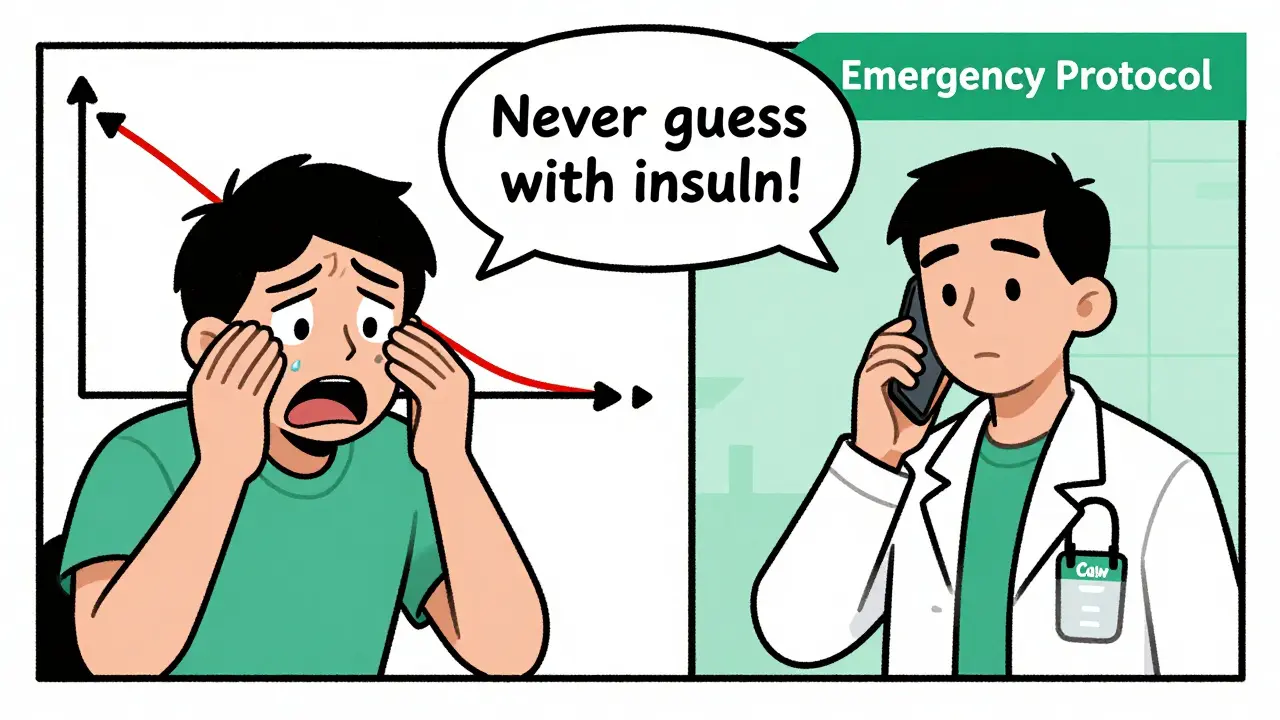
Long-acting insulin (like Lantus or Tresiba) is different. If you miss a dose by more than 2 hours, don’t guess. Contact your doctor. Taking it too late can cause overlapping effects, leading to unpredictable lows. Unlike other meds, insulin has no safety buffer.
Oral diabetes drugs vary too. Metformin? You can take it up to 2 hours late with no issue. But sulfonylureas like glipizide? Skip the missed dose. These drugs force your pancreas to release insulin, and taking them late can cause severe hypoglycemia-especially if you’ve eaten or are about to eat. The Kentucky Department for Public Health labels these as "RED FLAG" medications. Missing even one dose can land you in the ER.
Cardiovascular Drugs: Beta-Blockers, ACE Inhibitors, and More
For beta-blockers like metoprolol, take the missed dose if you remember within 4 hours. Beyond that, skip it. Taking it too close to the next dose can slow your heart rate too much, causing dizziness or fainting. ACE inhibitors like lisinopril are more forgiving-if you forget, take it up to 6 hours late. Their wider safety margin means the risk is lower.
But antiarrhythmics like amiodarone? No exceptions. Missing even one dose can trigger a life-threatening heart rhythm. The European Heart Rhythm Association says: call your doctor immediately. This isn’t a "wait and see" situation. The drug’s half-life is so long that levels don’t drop quickly, but the rebound effect can be sudden and deadly.
Diuretics like furosemide (Lasix) are tricky. If you miss your morning dose and remember before 2 p.m., take it. After that? Skip it. Taking it late at night can mean you’re up every hour to pee. That disrupts sleep and increases fall risk, especially in older adults. Mayo Clinic guidelines are clear: avoid nocturnal diuresis at all costs.
Seizure Medications: No Room for Error
Missing a dose of seizure meds like levetiracetam or valproate increases your chance of a seizure by 27% to 43%, according to the American Epilepsy Society. That’s not a small risk. If you remember within half the dosing interval-for example, within 6 hours for a twice-daily med-take it. If it’s closer to the next dose, skip it. Doubling up raises the risk of toxicity, which can cause confusion, tremors, or liver damage.
Missing two doses in a row? Get help immediately. Over 90% of U.S. epilepsy centers require a neurology consult after two missed doses. The brain’s electrical activity doesn’t bounce back easily. This isn’t about convenience-it’s about preventing brain injury.
Immunosuppressants and Chemotherapy
If you’ve had a transplant and take tacrolimus or cyclosporine, missing a dose is an emergency. The American Society of Transplantation found a 4.7-fold increase in acute rejection within 30 days of nonadherence. No exceptions. Call your transplant team immediately. They may need to adjust your dose or run a blood test. This isn’t something to handle alone.
Chemotherapy is even more complex. The National Comprehensive Cancer Network says: never adjust a dose yourself. These drugs are calculated down to your body weight, kidney function, and cancer type. Even a small change can be toxic or ineffective. If you miss a chemo dose, contact your oncology team. They’ll decide whether to reschedule, skip, or adjust based on your full treatment plan.
Antibiotics: Don’t Quit Early, Don’t Double Up
Many people stop antibiotics when they feel better. That’s how resistant bacteria are born. But what if you miss a dose? For time-dependent antibiotics like penicillin or amoxicillin, take it if you remember within 2 hours. If it’s been longer, skip it. Don’t try to catch up. These drugs work best when kept at steady levels in your blood.
For concentration-dependent antibiotics like gentamicin (an aminoglycoside), missing a dose is a red flag. These are dosed based on peak blood levels. Missing one means your levels could drop below the threshold needed to kill bacteria. You’ll need a blood test before the next dose. Always call your provider.
SingleCare’s 2023 study found 63% of patients stop antibiotics early when symptoms improve. That’s why infections come back-and why superbugs are growing. Never assume you’re "cured" before finishing the full course.
Hormonal Contraceptives: The One Exception
Here’s the only common exception to "never double up": combined oral contraceptives. If you miss one active pill, take two pills as soon as you remember (the missed one and the current day’s). Then take your next pill at the usual time. Use backup contraception (like condoms) for the next 7 days.
If you miss two active pills in a row? Take two pills for the next two days, then resume your regular schedule. Use backup for 7 days. If you miss three or more, throw out the pack and start a new one. Consult your provider-especially if you had unprotected sex. The CDC’s 2022 guidelines are clear: this is the only medication where doubling is not just allowed, but required.
Psychiatric Medications: SSRIs, MAOIs, and Antipsychotics
SSRIs like sertraline or fluoxetine? Missing one dose rarely causes problems. You might feel a little off, but it’s not dangerous. Skip the missed dose and continue normally. No need to double up.
MAOIs like phenelzine? Call your doctor immediately. These drugs interact with food, other meds, and even your body’s natural chemicals. Missing a dose can cause a rebound hypertensive crisis when you restart. This is rare but deadly.
Antipsychotics like risperidone or olanzapine? Missing just two doses can trigger a return of hallucinations, paranoia, or aggression. The FDA reports 38% of patients experience symptom rebound after missing two doses. Don’t wait. Contact your psychiatrist. You may need a short-term adjustment to prevent a crisis.
Universal Rules Everyone Should Know
Despite all the differences, there are two ironclad rules:
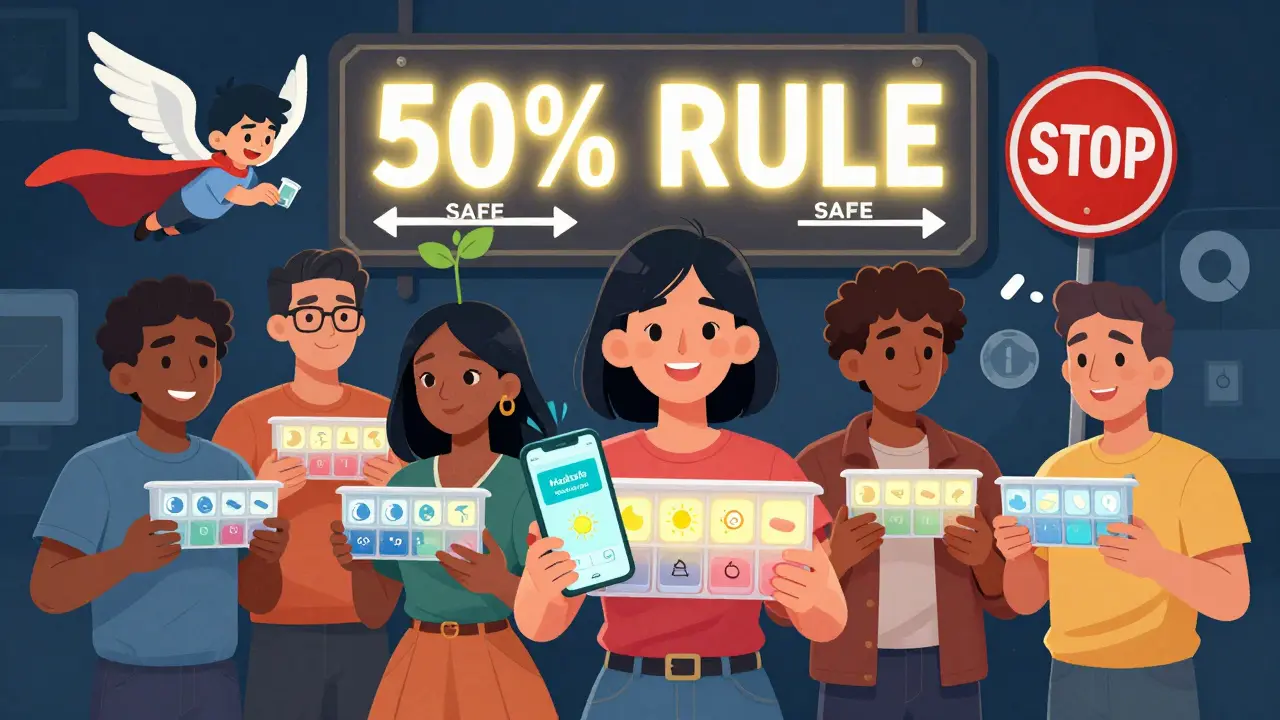
- If more than half the dosing interval has passed (e.g., more than 12 hours for a twice-daily med), skip the missed dose. Resume your regular schedule. This rule applies to 94% of institutional protocols.
- Never double a dose unless it’s a hormonal contraceptive. Doubling is the #1 cause of preventable hospitalizations for older adults, according to the Institute for Safe Medication Practices. It’s responsible for 28% of all medication-related ER visits in seniors.
The American Pharmacists Association calls this the "50% Rule." It’s simple, safe, and backed by data from over 500 U.S. hospitals.
How to Prevent Missed Doses
Prevention beats correction. Here’s what works:
- Use a pill organizer with time-labeled compartments. Studies show a 27% improvement in adherence.
- Set smartphone reminders. Apps like Medisafe (used by 22 million people) reduce missed doses by 38%.
- Ask your pharmacist: "What do I do if I miss a dose?" Most don’t give clear instructions-only 54% of U.S. pharmacies provide medication-specific guidance.
- Keep an emergency dose in your bag or work drawer. People with thyroid conditions or epilepsy often do this. One Reddit user said: "I keep my levothyroxine in my laptop bag. I never leave home without it."
Low-income patients are 2.3 times more likely to be hospitalized for missed doses, according to AHRQ. Structured education from pharmacists cuts this risk by 41%. If you’re on Medicaid or Medicare, ask if your pharmacy offers free adherence counseling.
When to Call Your Doctor
Call immediately if you miss:
- Any dose of an immunosuppressant
- Two or more doses of an antiepileptic
- Any dose of warfarin if you’ve had recent surgery or injury
- Any dose of insulin and you’re feeling shaky, confused, or unusually thirsty
- Any dose of an antipsychotic and you feel your symptoms returning
Don’t wait. These aren’t "figure it out later" situations. They’re emergencies.
What if I miss a dose and don’t remember until the next day?
Skip the missed dose. Do not take two doses the next day. Most medications are designed to be taken at regular intervals, and doubling up can be dangerous. Resume your normal schedule the following day. For example, if you take a pill daily and forget it on Monday, don’t take it on Tuesday. Just take your Tuesday dose as scheduled.
Can I use a pill organizer to avoid missing doses?
Yes, and it’s one of the most effective tools. Pill organizers with separate compartments for morning, afternoon, and evening doses reduce missed doses by 27%, according to the Annals of Internal Medicine. Look for ones with alarms or timers. Combine it with smartphone reminders for maximum reliability.
Why is doubling a dose so risky?
Many medications have a narrow therapeutic index-meaning the difference between the right dose and a toxic one is very small. Drugs like warfarin, digoxin, and levothyroxine can cause life-threatening side effects if taken in excess. Doubling a dose doesn’t make the drug work better-it just increases your risk of overdose. The Institute for Safe Medication Practices recorded over 17,000 adverse events from this mistake in 2022.
Are there apps that help track missed doses?
Yes. Medisafe, MyTherapy, and Dosecast are among the most popular. A 2023 JMIR mHealth study of 12,500 users found that reminder apps improved adherence by 32.7%. These apps send alerts, log missed doses, and can even notify a family member if you don’t respond. Some sync with your pharmacy or doctor’s system.
What if I’m on multiple medications and miss one?
Check each medication individually. Don’t assume the same rule applies to all. For example, you might skip a missed beta-blocker but take a missed metformin. Keep a printed list of instructions for each drug. Ask your pharmacist to write them down. Many people on five or more medications don’t realize each has its own missed-dose protocol.
Medication safety isn’t about perfection-it’s about knowing what to do when things go wrong. Whether you’re managing diabetes, heart disease, epilepsy, or birth control, the right action after a missed dose can prevent a hospital visit. Use the 50% Rule. Avoid doubling up. And when in doubt-call your provider. Your health depends on it.


Comments (9)