
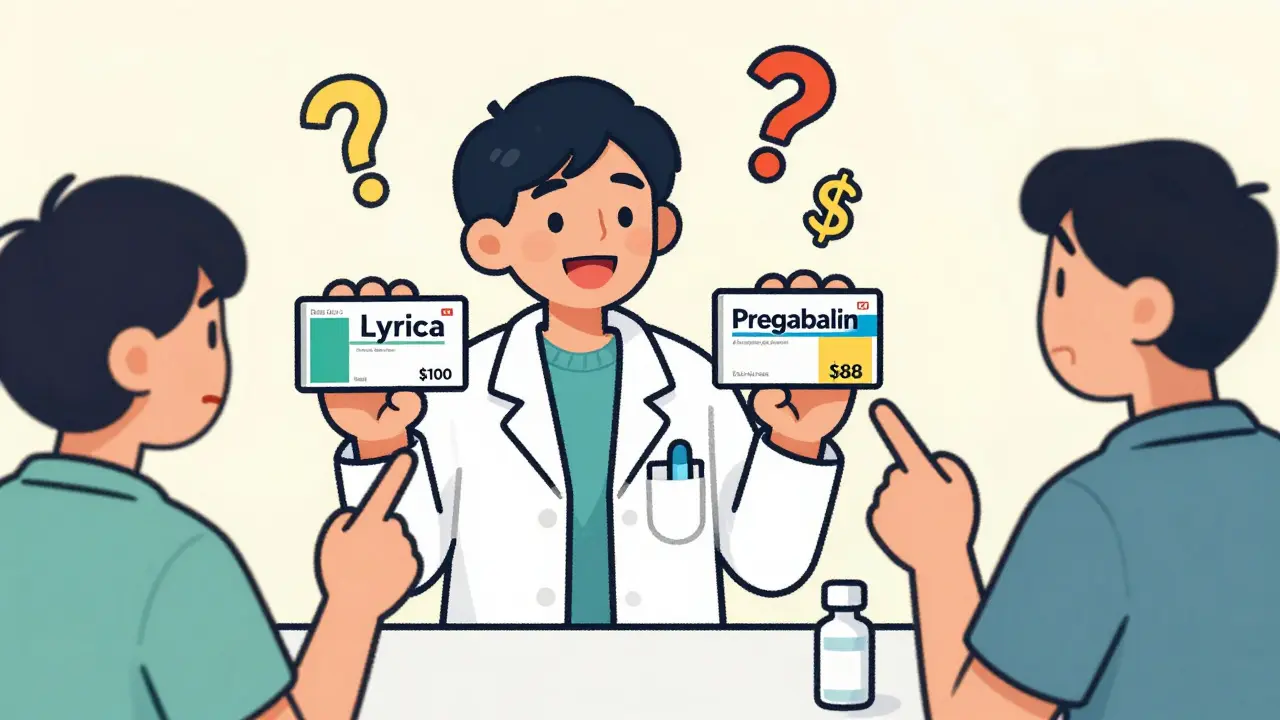
Ever picked up a prescription and noticed your "generic" pill looks exactly like the brand-name version - same shape, same color, same imprint - but costs less? That’s likely an authorized generic. But here’s the catch: not every drug has one. In fact, most don’t. And the reason isn’t about science or safety. It’s about money, strategy, and who controls the market.
What Exactly Is an Authorized Generic?
An authorized generic isn’t a copy. It’s the real thing - same factory, same formula, same packaging - just sold under a different label. Unlike traditional generics, which are made by other companies after the brand’s patent expires and must prove they work the same way, authorized generics are made by the original brand company itself. They use the same FDA-approved New Drug Application (NDA) as the brand-name version. No extra testing. No delays. Just a new box and a lower price tag.For example, when Pfizer launched an authorized generic of its $3 billion drug Lyrica in 2017, it was identical to the brand - same active ingredient, same inactive fillers, same manufacturing line. The only difference? The label said "Pregabalin" instead of "Lyrica," and the price dropped by 12% within three months.
Why Don’t All Drugs Have Authorized Generics?
The short answer: because the brand company has to want to make one.Authorized generics don’t happen by accident. They’re a business decision. And only about 1,215 of the thousands of prescription drugs in the U.S. have them - according to FDA data from 2019. That’s less than 5% of all medications. Why so few?
It comes down to profit. If a drug brings in $1 billion a year, like Mylan’s EpiPen, the company might launch an authorized generic to undercut potential competitors during the 180-day exclusivity window. But if a drug only makes $50 million annually, it’s not worth the hassle. The cost of re-labeling, legal review, and market planning doesn’t add up.
According to Evaluate Pharma’s 2021 analysis, 89% of brand manufacturers with top-selling drugs (over $1 billion in annual sales) have used authorized generics. Only 22% of companies with drugs under $100 million in sales have. It’s not about whether the drug can have one - it’s about whether it’s profitable to make one.
The Hidden Trade-Off: Lower Prices Today, Less Competition Tomorrow
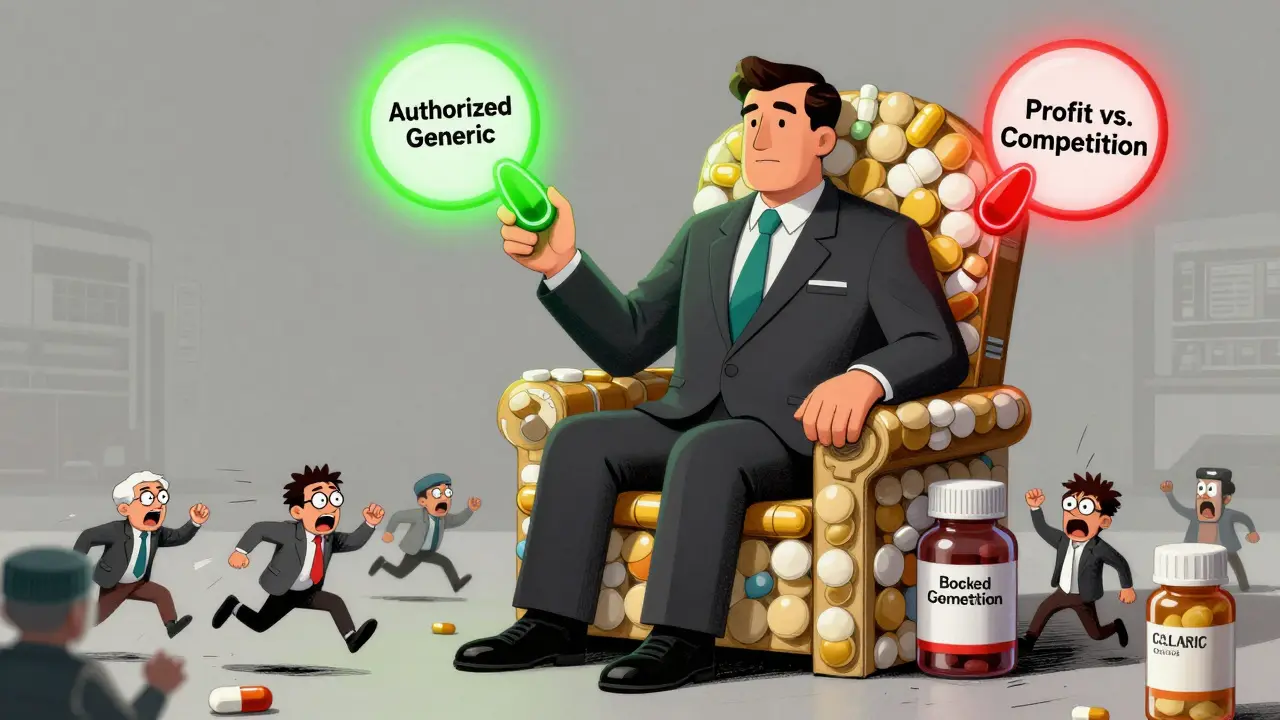
Authorized generics can save you money - but they might also block cheaper options later.Here’s how it works: when a brand-name drug’s patent expires, the first generic company to file gets 180 days of exclusive rights to sell their version. That’s a huge incentive. But if the brand company launches its own authorized generic during that 180-day window, it crushes the first generic’s profits. The Federal Trade Commission found that when an authorized generic enters during this period, the first generic’s revenue drops by 40% to 52%. That makes it risky - even impossible - for other companies to invest in challenging the patent.
Think of it like this: if you’re a generic manufacturer and you know the brand company is going to drop its own version at the same time, why spend millions on legal battles and FDA filings? The return isn’t worth it. Harvard Medical School’s Aaron Kesselheim found this dynamic reduces the incentive to challenge patents by up to 60%. The result? Fewer generics enter the market long-term, and prices don’t fall as far as they could.
Who Benefits? Who Gets Left Out?
Consumers see immediate savings. The FTC reported that when an authorized generic enters during the 180-day window, retail prices drop 4% to 8%, and wholesale prices fall 7% to 14%. For a $100 prescription, that’s $4 to $14 saved per fill. AARP’s 2019 analysis found patients saved an average of $18.75 per prescription with authorized generics.But here’s the flip side: patients often don’t know they’re getting an authorized generic. Pharmacists report a 27% increase in prescription errors when both brand and AG versions are available - because they look identical. One patient told a pharmacy in Ohio they were confused when their "generic" Protonix suddenly came in a different bottle with a different name. "I thought they gave me the wrong medicine," they said.
Doctors, too, are caught in the middle. A 2018 AMA survey of 1,200 physicians found 63% said authorized generics made therapeutic substitution harder. If two versions look the same but are priced differently, which one should they prescribe? And if the patient’s insurance favors one over the other, does that affect outcomes?
Why the FDA Can’t Force Authorized Generics
The FDA keeps a public list of authorized generics. But they don’t create them. They don’t require them. They don’t even regulate when they’re launched.The agency only tracks what companies voluntarily report. That’s why the list updates annually - and why it’s often out of date. In 2022, the FDA switched to quarterly updates after public pressure, but they still don’t have the legal power to force a brand company to make an authorized generic. Even if a drug has no traditional generics and is outrageously expensive, the FDA can’t step in and say, "You must release a cheaper version."
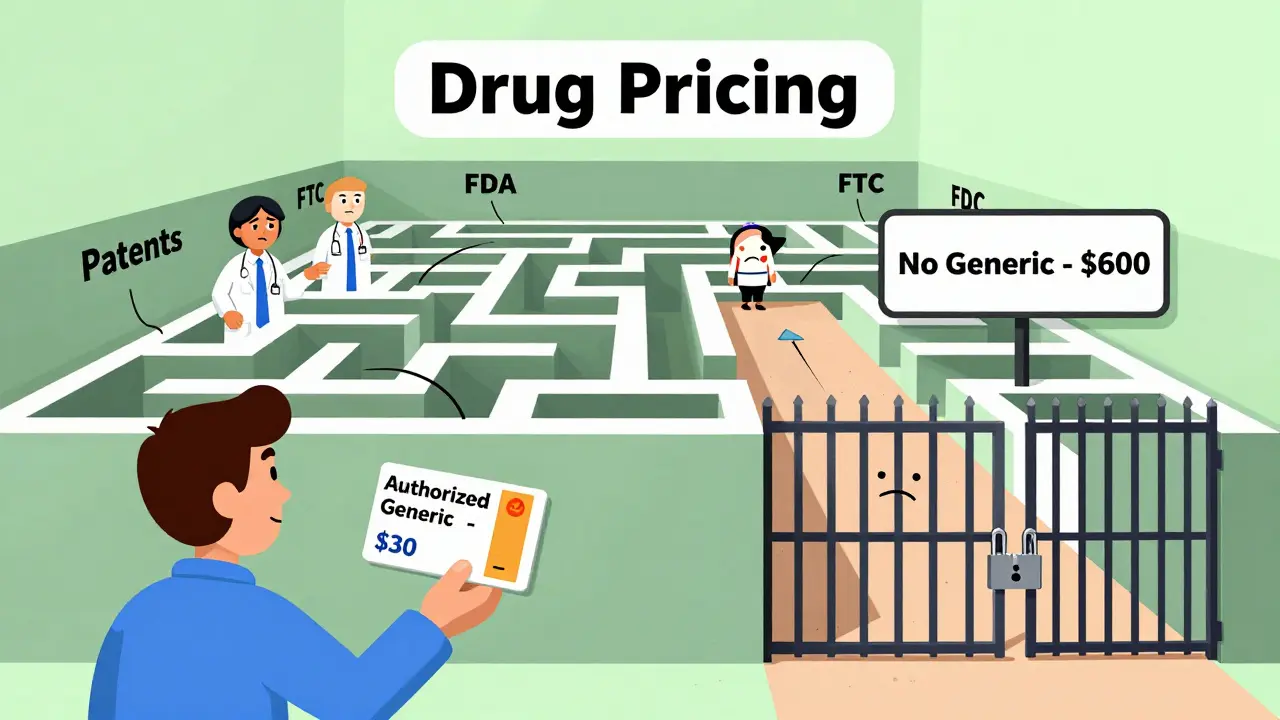
This is why drugs like Mylan’s EpiPen - which cost over $600 before the AG launched - still have no true generic alternatives years later. The authorized generic brought the price down to $300, but no other company has dared to challenge the patent. Why? Because the brand company already owns the market.
The Bigger Picture: Authorized Generics Are a Tool, Not a Solution
Authorized generics aren’t bad. They’re a smart business move for manufacturers and a short-term win for consumers. But they’re not the answer to high drug prices.They’re a tactic used by companies with market power to control competition - not to encourage it. The Hatch-Waxman Act of 1984 was meant to speed up generic access. Instead, authorized generics have become a way to delay it. In 2023, the FTC filed a legal brief arguing that these strategies undermine the very purpose of the law.
Legislation like the Preserve Access to Affordable Generics and Biosimilars Act, reintroduced in 2023 with 43 bipartisan sponsors, aims to ban authorized generics during the 180-day exclusivity period. But so far, no law has passed. And until it does, the decision stays with the brand company.
What You Can Do
If you’re paying for a brand-name drug with no generic, ask your pharmacist: "Is there an authorized generic?" If there is, you might be able to switch to it for less. It’s still the same drug - just cheaper.If your prescription is expensive and has no authorized generic, ask your doctor if a different medication in the same class is available with generic options. Sometimes, switching brands can mean switching to a much cheaper drug - without losing effectiveness.
And if you’re on Medicare Part D, check your plan’s formulary. Some plans list authorized generics separately, and they may be cheaper than the brand - even if they’re not labeled as "generic."
Don’t assume the cheapest option is always the best. But don’t assume the brand version is the only one worth taking, either. Ask questions. Know your options. Your wallet - and your health - will thank you.
Are authorized generics the same as regular generics?
No. Regular generics are made by other companies after the brand’s patent expires. They must prove they work the same way through testing. Authorized generics are made by the original brand company using the same formula and factory - they’re literally the same pill in a different box. No testing required.
Why don’t all drugs have authorized generics?
Because the brand company has to choose to make one. It’s a business decision. Only drugs with high sales ($500 million or more per year) are likely to get an authorized generic. For cheaper drugs, the cost of launching one isn’t worth the profit. Only about 5% of all prescription drugs have them.
Can I ask my pharmacist for an authorized generic?
Yes. If your drug has an authorized generic, your pharmacist can usually switch you to it - even if your prescription says the brand name. Ask: "Is there an authorized generic version of this?" It’s the same medication, often at a lower price.
Do authorized generics lower prices permanently?
Not usually. Authorized generics cause a short-term price drop - often during the 180-day window after patent expiration. But because they discourage other generic companies from entering the market, long-term competition can suffer. Prices may stay higher than they would if multiple generic makers were competing.
Are authorized generics safe?
Yes. Authorized generics are identical to the brand-name drug - same ingredients, same manufacturing process, same quality control. They’re not copies. They’re the real thing, just sold under a different label. The FDA approves them under the same standards as the brand.
Why do pharmacies sometimes give me a different version of the same drug?
Because the same drug can be sold under multiple labels: the brand name, an authorized generic, and sometimes multiple traditional generics. They all contain the same active ingredient but may look different in packaging or pill shape. Pharmacists often switch based on cost and insurance coverage - not because you got the wrong medicine.


Comments (15)