
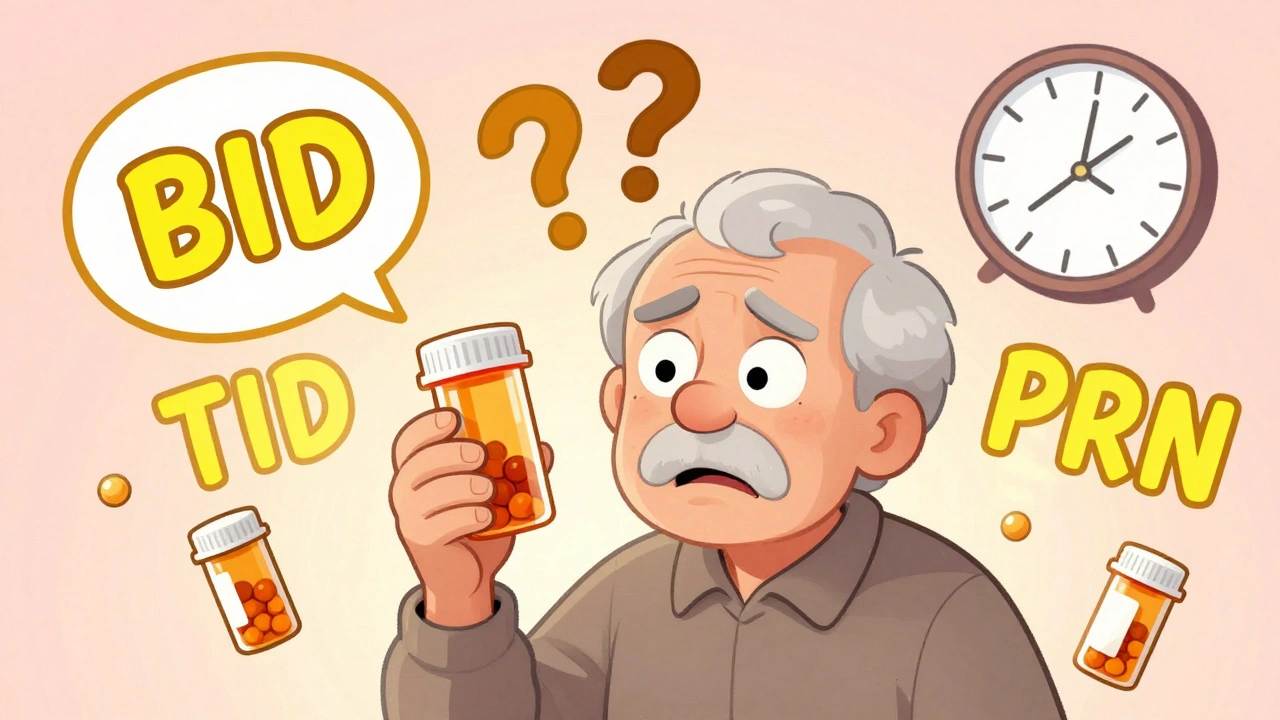
When you see BID, an abbreviation for "bis in die," Latin for "twice a day," commonly used in prescription instructions to specify how often a medication should be taken. Also known as twice daily, it’s one of the most common dosing schedules you’ll see on your pill bottle—but most people don’t realize how much timing affects safety and effectiveness. Taking a drug BID isn’t just about swallowing two pills a day. It’s about spacing them out to keep the medicine at a steady level in your bloodstream. Miss a dose? Take both at once? That’s when things go wrong—especially with drugs like warfarin, insulin, or antibiotics where even small changes in blood levels can cause serious side effects.
Why does BID matter so much? Because your body doesn’t work on a one-time hit schedule. Drugs like clozapine, an antipsychotic with a narrow therapeutic window where blood levels must be tightly controlled need consistent dosing to avoid toxicity or treatment failure. Same goes for gabapentinoids, medications like gabapentin and pregabalin that require regular intervals to prevent breakthrough pain or dangerous respiratory depression, especially when mixed with opioids. When a doctor writes BID, they’re not just being lazy with instructions—they’re trying to match your body’s rhythm. Skipping the morning dose and taking both at night can crash your blood pressure, spike your blood sugar, or make your infection worse.
And it’s not just about the drug itself. How you take it matters too. Some meds need food, others need an empty stomach. Some can’t be crushed. Some interact with coffee, grapefruit, or even antacids. The FDA and pharmacy systems track these details using NDC codes, unique identifiers that help ensure the right drug, dose, and frequency are dispensed without substitution errors. If you’re on multiple medications, mixing up BID with TID (three times a day) or QD (once daily) can lead to dangerous overlaps—especially with painkillers, blood thinners, or antidepressants. That’s why understanding your prescription isn’t optional. It’s your first line of defense.
What you’ll find below is a collection of real-world stories, science-backed guides, and hidden risks tied to how medications are timed, labeled, and monitored. From how the FDA tracks generic drug safety to why your insulin pen needs to be stored just right, every article here ties back to one thing: getting your dosing right saves lives. These aren’t theory pieces—they’re practical, no-fluff advice from people who’ve seen what happens when BID gets ignored.
Written by Mark O'Neill
Learn what BID, TID, and PRN really mean on your prescription labels. Stop guessing your dosing schedule and avoid dangerous mistakes with clear, practical advice backed by medical research.