
When you have diabetes, your medications aren’t just pills—they’re tools that keep your blood sugar in check. But like any powerful tool, they come with diabetes medication risks. A simple misstep in timing, dosage, or combining drugs can lead to dangerous drops in blood sugar, kidney strain, or even life-threatening reactions. Insulin, a hormone therapy used to control blood glucose in type 1 and advanced type 2 diabetes is one of the most effective treatments, but also one of the most dangerous if not handled correctly. Metformin, the first-line oral drug for type 2 diabetes is generally safe, but it can cause lactic acidosis in people with kidney problems or when mixed with certain contrast dyes. And hypoglycemia, dangerously low blood sugar that can happen with insulin, sulfonylureas, or meglitinides doesn’t always come with obvious symptoms—especially in older adults or people who’ve had diabetes for years.
Many people don’t realize that the biggest risks aren’t always from the drug itself, but from how it interacts with other things in your life. Taking a diabetes pill with a beta-blocker for high blood pressure can hide the warning signs of low blood sugar—like a racing heart—leaving you unaware until it’s too late. Even something as simple as skipping a meal after taking your medication can send your blood sugar crashing. And if you’re on multiple drugs, like a statin for cholesterol and a diuretic for fluid retention, those can affect how your body processes your diabetes meds. The FDA’s post-market surveillance, the system that tracks real-world side effects after a drug is approved has flagged several diabetes drugs for unexpected risks, especially when used long-term or in older patients. It’s not just about the label—it’s about your whole health picture.
You’re not alone in this. Thousands of people manage diabetes safely every day, but it takes awareness, not just adherence. Knowing how to read your prescription directions, understanding why your pharmacy might switch your generic, and recognizing the early signs of a reaction can make all the difference. The posts below cover exactly what you need: how to spot hidden dangers in your meds, what to do when your blood sugar drops without warning, how certain drugs can harm your kidneys or liver, and why even "safe" over-the-counter supplements can interfere with your treatment. These aren’t theory pages—they’re real-world guides written for people who take these drugs every day. What you’re about to read could help you avoid a hospital visit, a missed workday, or worse.
Written by Mark O'Neill
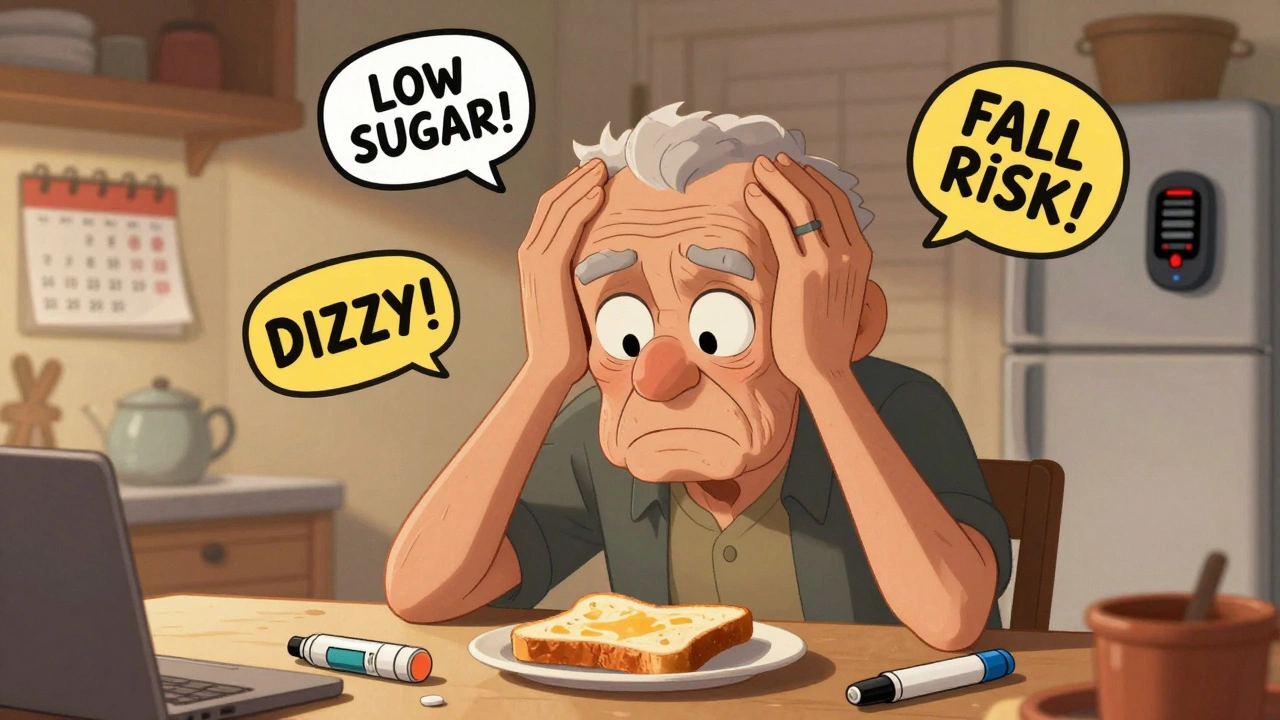
Hypoglycemia in older adults is a silent threat that increases fall risk, cognitive decline, and death. Learn why certain diabetes meds like glyburide are dangerous, how to spot hidden symptoms, and what prevention plans actually work.