
When you pick up a generic drug, a medication that contains the same active ingredient as a brand-name drug but is sold under its chemical name. Also known as non-brand medication, it is designed to work the same way in your body—same dose, same route, same effect. But safety? That’s where things get messy. Not all generics are created equal, and the difference isn’t always in the pill—it’s in the rules, the testing, and who’s being studied.
The FDA generic approval, the process by which the U.S. Food and Drug Administration verifies that a generic drug is therapeutically equivalent to its brand-name counterpart sounds simple: same active ingredient, same strength, same way of taking it. But here’s what they don’t tell you—some drugs need way more scrutiny. Take NTI generics, drugs with a narrow therapeutic index, where even a small change in blood level can cause toxicity or treatment failure. Warfarin, lithium, and levothyroxine aren’t just any pills. Mess up the dose by 10%, and you could bleed out, have a seizure, or crash your metabolism. The FDA treats these differently. So do Europe, Canada, and Japan. If your generic isn’t tested under the same strict standards as the brand, you’re playing Russian roulette with your health.
Then there’s bioequivalence, the scientific test that proves a generic drug delivers the same amount of medicine into your bloodstream at the same rate as the original. Most generics pass this test using young, healthy men. But what if you’re 70? Female? Have kidney disease? The science is catching up—new studies now require testing across age groups and sexes because your body doesn’t process drugs the same way as a 25-year-old male volunteer. And it’s not just about absorption. Some generics use different fillers or coatings. For people with allergies, or those on multiple meds, that tiny difference can trigger side effects or dangerous interactions—like gabapentin with opioids, or clozapine with smoking.
You might think safety means no side effects. But in generic drugs, safety means consistency. It means knowing your pill won’t suddenly stop working because the manufacturer changed suppliers. It means understanding why your copay went up even though the drug is "generic." It means realizing that a label saying "therapeutic equivalence" doesn’t always mean "identical in every patient." The generic drug safety conversation isn’t about fear—it’s about awareness. What works for one person might not work for you, even if the bottle looks the same.
Below, you’ll find real-world guides on how these drugs are tested, regulated, and monitored. From how pharmacy systems avoid mix-ups with NDC codes, to why your warfarin dose might need adjusting after quitting smoking, to how global regulators handle high-risk generics. This isn’t theory. It’s what happens when a pill leaves the factory and enters your body—and what you can do to stay safe.
Written by Mark O'Neill
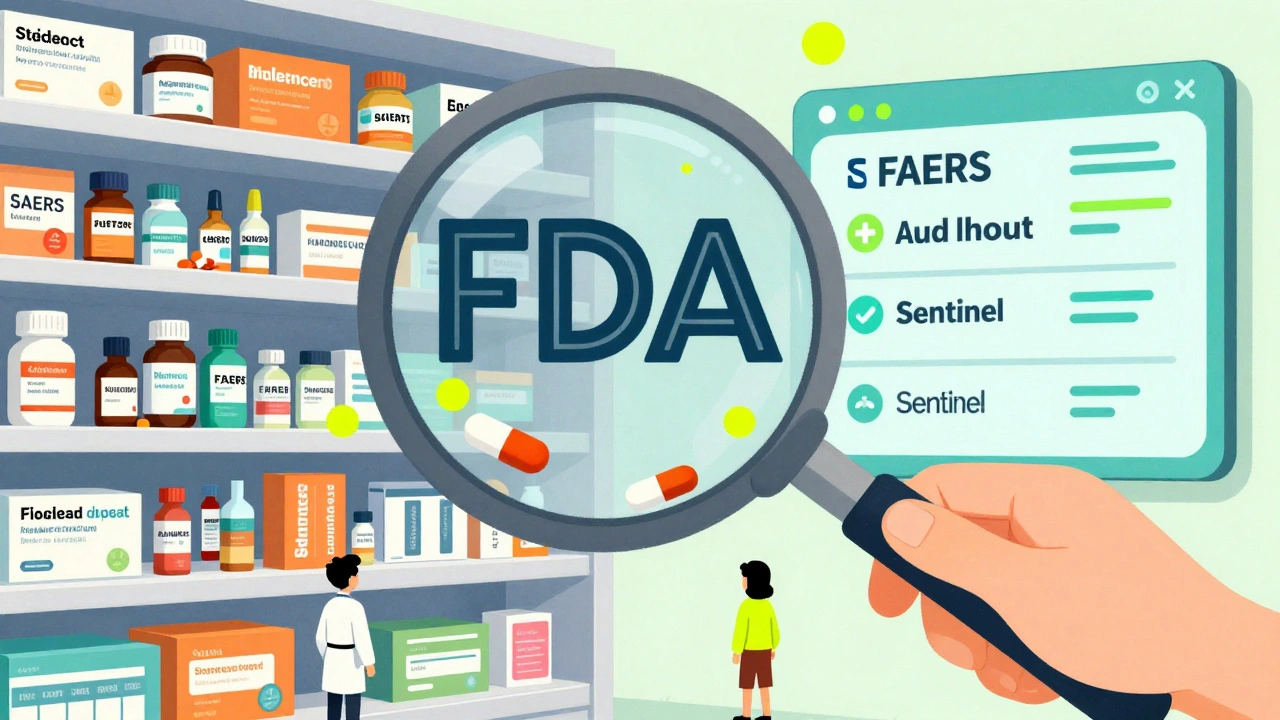
The FDA monitors generic drugs after approval using real-time data, adverse event reports, and factory inspections to ensure ongoing safety. Learn how FAERS, Sentinel, and AI are helping catch hidden risks.