
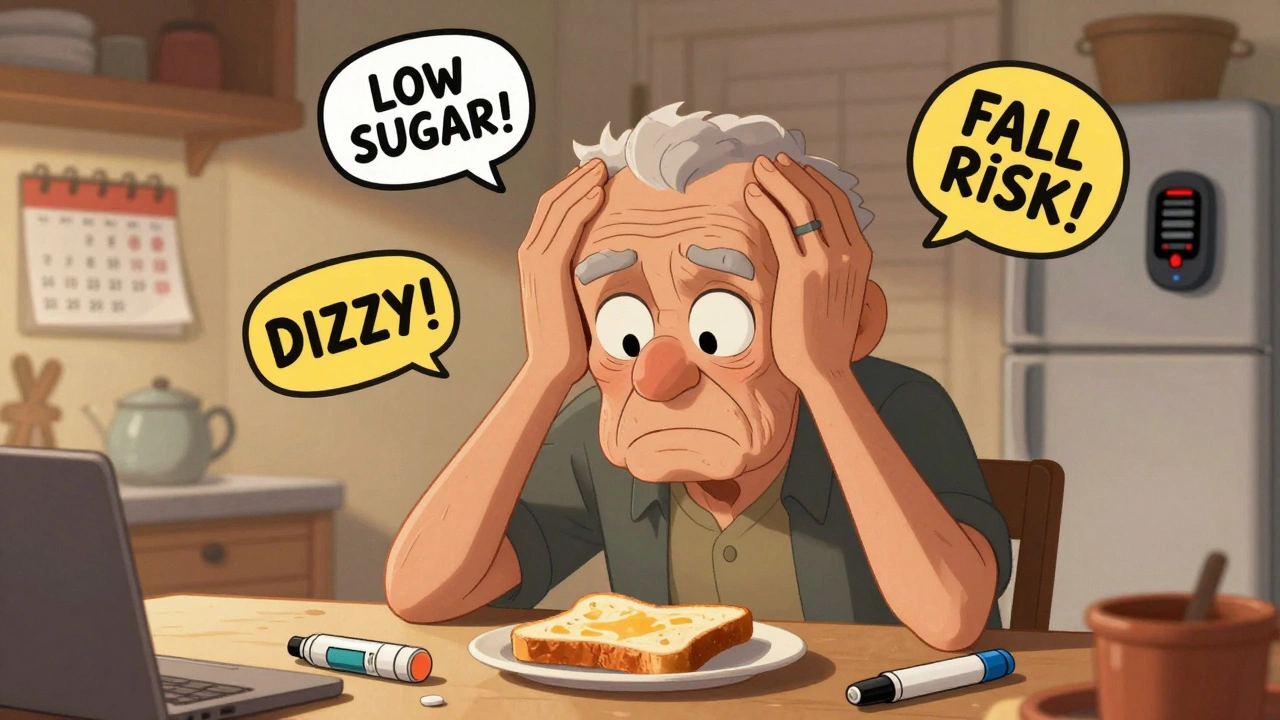
When older adults experience hypoglycemia in elderly, a dangerous drop in blood sugar levels that can lead to confusion, falls, or even coma. Also known as low blood sugar in seniors, it’s not just a side effect—it’s a silent emergency that often goes unnoticed until it’s too late. Unlike younger people, seniors don’t always feel the warning signs like shakiness or sweating. Their bodies respond differently to insulin and medications, and many take multiple drugs that can interact in dangerous ways.
Diabetes medication side effects, especially from insulin or sulfonylureas, are the most common cause. But it’s not just about pills—poor nutrition, kidney decline, and delayed meals play a huge role. Many elderly patients skip meals because they’re not hungry, or forget to eat after taking their medicine. Others take blood pressure or heart drugs that mask the usual symptoms of low sugar, making it harder to spot trouble before it turns serious. The brain needs glucose to function, and when levels drop too low, confusion, dizziness, or even seizures can happen. A fall from dizziness isn’t just an injury—it can lead to hospitalization, loss of independence, or worse.
Elderly hypoglycemia symptoms often look like dementia or aging. Slurred speech, irritability, or staring blankly? These aren’t just "getting older"—they could be low blood sugar. Even mild episodes increase the risk of heart problems and cognitive decline over time. And because many seniors live alone, no one may notice until it’s an emergency. The good news? Most cases are preventable. Simple changes—like checking blood sugar before bed, keeping fast-acting carbs nearby, and reviewing meds with a pharmacist—can make a huge difference.
You’ll find real, practical advice in the posts below. From how to read prescription labels correctly to understanding why certain drugs increase risk in older adults, these articles give you the tools to spot trouble early. We cover how medications interact, what to watch for when someone’s on insulin, and how to talk to doctors about adjusting doses safely. No fluff. Just what works.
Written by Mark O'Neill
Hypoglycemia in older adults is a silent threat that increases fall risk, cognitive decline, and death. Learn why certain diabetes meds like glyburide are dangerous, how to spot hidden symptoms, and what prevention plans actually work.