
When you pick up a prescription, medication instructions, the clear, specific directions that tell you how, when, and why to take a drug. Also known as prescribing information, these instructions are your personal safety guide—written by doctors and approved by regulators like the FDA, the U.S. agency that ensures drugs are safe and effective before and after they reach patients. But most people skip reading them, assume they know what to do, or get confused by medical jargon. That’s where things go wrong.
Medication instructions aren’t just about ‘take one pill daily.’ They cover drug interactions, how one medicine can dangerously change the effect of another, like how gabapentinoids and opioids together can slow your breathing to dangerous levels. They include storage requirements, the exact temperature and light conditions needed to keep a drug working as intended, such as keeping insulin away from heat or freezing. And they define contraindications, when a drug should never be used because of serious risks, like avoiding MAO inhibitors with certain foods or antidepressants. These aren’t suggestions—they’re lifesaving rules.
Many people don’t realize that even generics, which are cheaper and just as effective, must follow the same strict labeling rules as brand-name drugs. The FDA requires every label to include warnings about side effects, dosing schedules, and what to avoid. But labels can be overwhelming. That’s why understanding terms like precaution, indication, and therapeutic equivalence matters. A single misread instruction—like taking warfarin with too much vitamin K, or missing a dose of clozapine after quitting smoking—can trigger hospital visits or worse.
You’re not alone if this feels confusing. Even pharmacists admit that patients often misunderstand how to take their meds. But getting it right isn’t about memorizing science—it’s about asking the right questions, checking your label every time, and speaking up when something doesn’t feel right. Below, you’ll find real-world guides on how to decode your prescription, avoid deadly mix-ups, store your drugs properly, and report side effects that could help others. These aren’t theory pieces. They’re tools made by people who’ve seen what happens when instructions are ignored—and how to fix it.
Written by Mark O'Neill
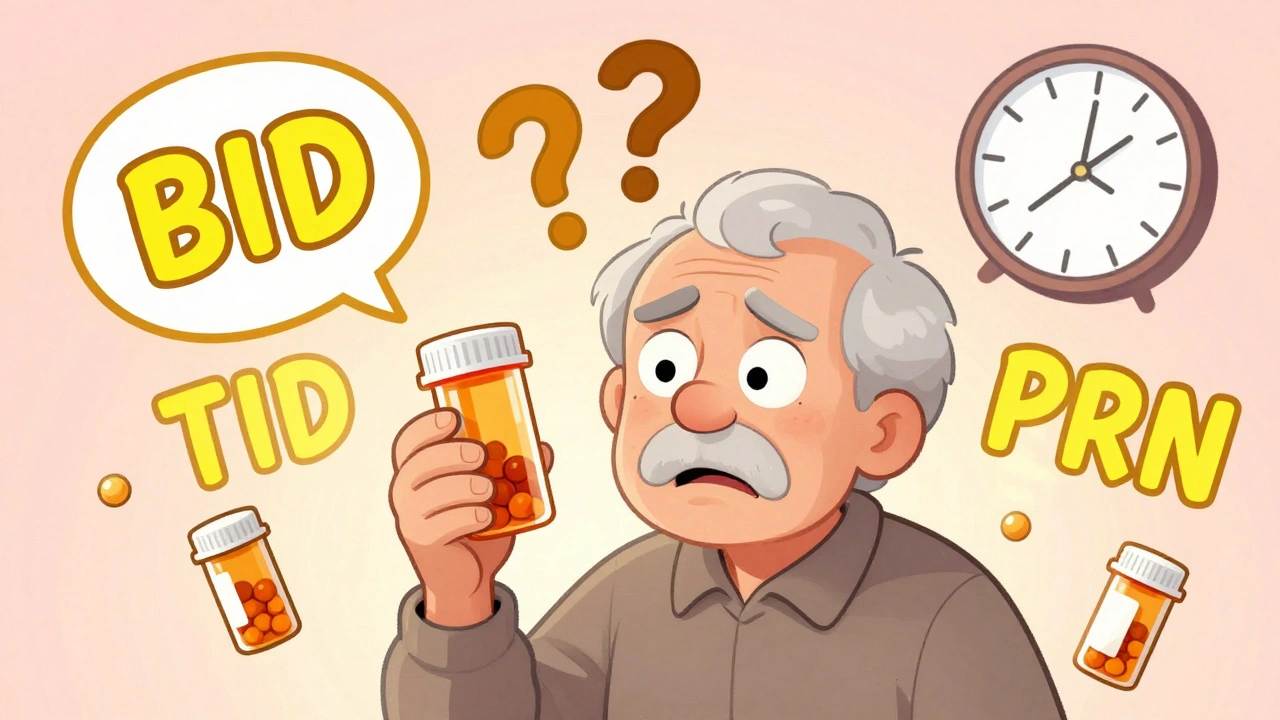
Learn what BID, TID, and PRN really mean on your prescription labels. Stop guessing your dosing schedule and avoid dangerous mistakes with clear, practical advice backed by medical research.