
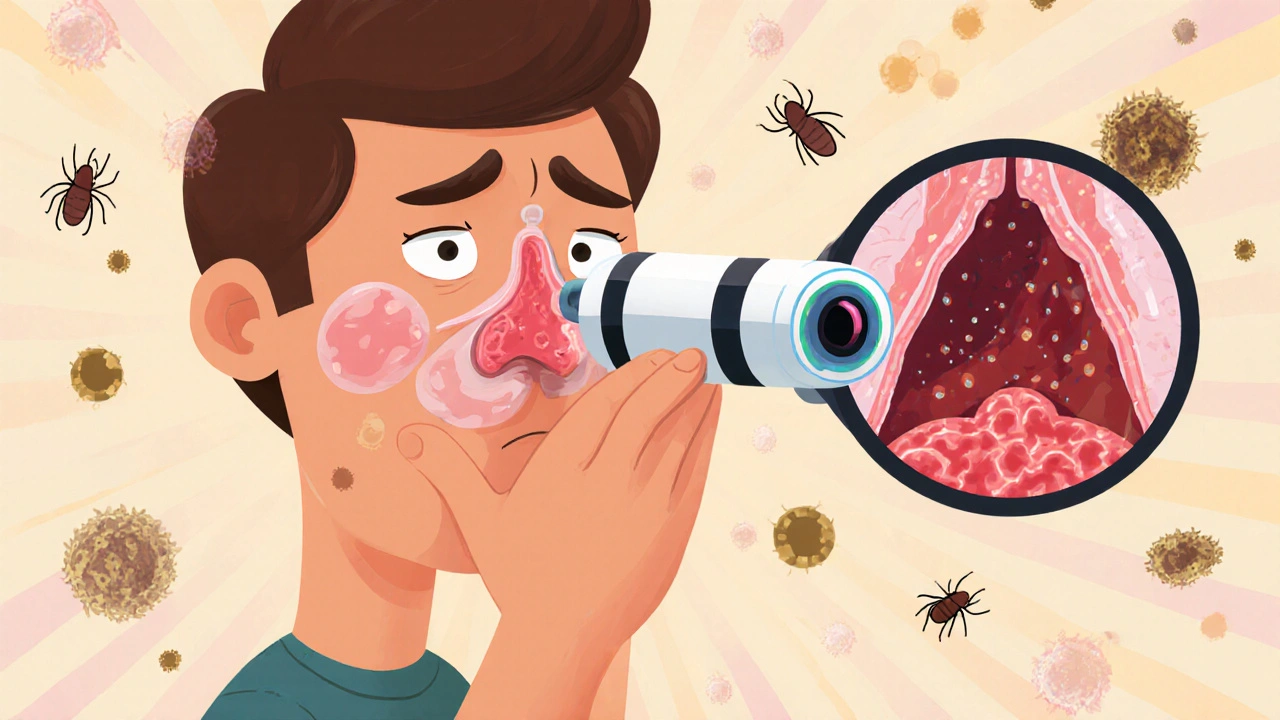
When nasal polyps, noncancerous growths in the lining of the nose and sinuses that block airflow and reduce smell. Also known as sinus polyps, they’re not tumors—but they can make breathing feel impossible. If you’ve been dealing with constant stuffiness, a dull sense of smell, or that feeling like your nose is always full, you’re not alone. These soft, grape-like swellings form when the mucous membranes stay inflamed for too long—often because of chronic sinusitis, allergies, or asthma.
Nasal polyps don’t show up overnight. They grow slowly, which is why many people ignore them until they’re severe. By then, you might be snoring, breathing through your mouth, or getting frequent sinus infections. What makes them tricky is they often come with other conditions. About 30% of people with nasal polyps also have asthma. And if you have aspirin sensitivity, your risk jumps even higher. The inflammation driving these growths is the same one that fuels allergic reactions and chronic sinus infections. That’s why treating the root cause—like controlling allergies or managing asthma—is just as important as shrinking the polyps themselves.
Most treatments start with corticosteroids, anti-inflammatory sprays or pills that reduce swelling and shrink polyps. These aren’t magic, but they’re the most proven option. If sprays don’t help, oral steroids might be tried short-term. Surgery is an option if things don’t improve, but polyps often come back unless the underlying inflammation is controlled. That’s why long-term management matters more than a one-time fix. You need to think about your environment too—dust, mold, smoke, and strong scents can all make things worse.
What you’ll find below isn’t just a list of articles. It’s a practical collection of what actually works when you’re dealing with nasal polyps and the conditions that come with them. You’ll see how inflammation connects to asthma and allergies, what medications help most, and how to avoid traps like overusing decongestants. There’s no fluff here—just clear, real-world info from people who’ve been there. Whether you’re trying to get back your sense of smell or just want to breathe easier at night, these posts give you the tools to take control.
Written by Mark O'Neill
Chronic sinusitis lasts over 12 weeks and isn't just a bad cold. Learn how allergies, infections, and surgery affect your breathing-and what actually works to manage it long-term.