
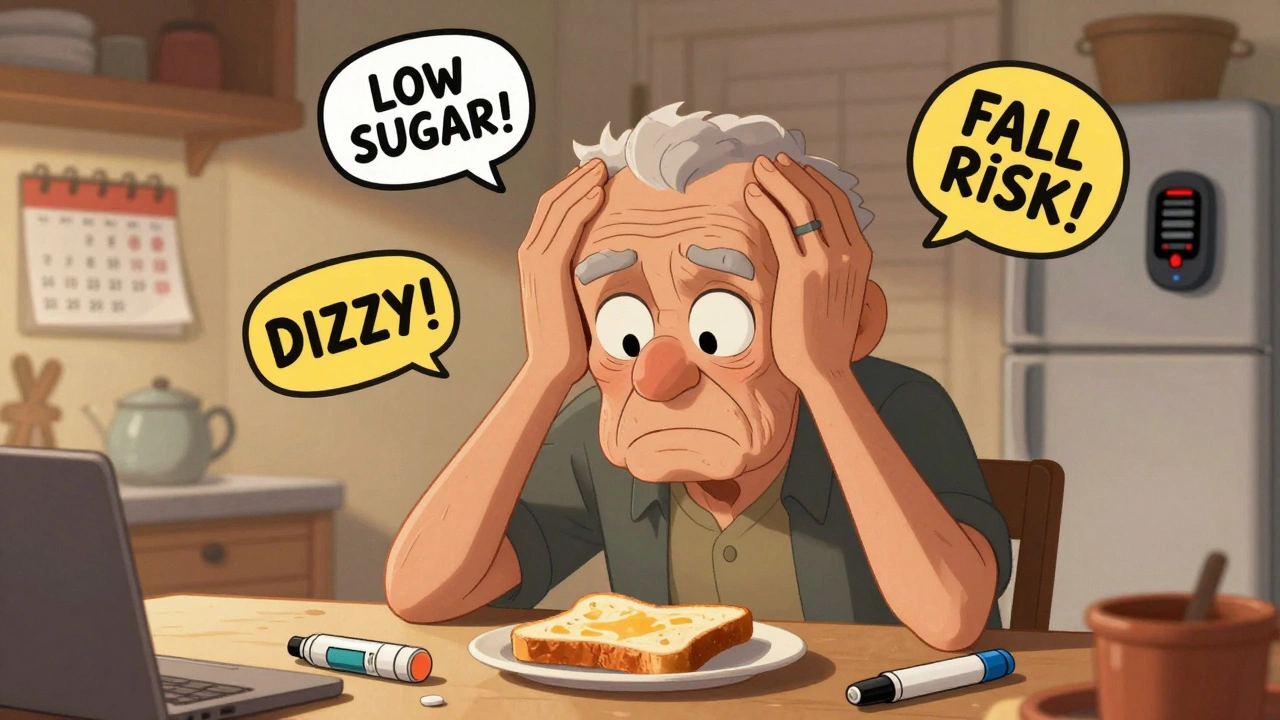
When you’re over 65 and managing diabetes, older adult hypoglycemia prevention, the practice of avoiding dangerously low blood sugar in seniors with diabetes. It’s not just about taking pills on time—it’s about staying safe, alert, and independent. Low blood sugar doesn’t just make you shaky or sweaty. In older adults, it can cause confusion, falls, seizures, or even heart problems. And because symptoms often get mistaken for aging, many cases go unnoticed until it’s too late.
medication side effects, unintended reactions from drugs used to treat diabetes are the #1 cause of hypoglycemia in seniors. Sulfonylureas and insulin, while effective, are risky if dosed too high or taken without regular meals. Even newer drugs like SGLT2 inhibitors can cause issues when combined with diuretics or kidney changes. And let’s not forget diabetes management, the daily routine of balancing food, activity, and medication to keep blood sugar steady. Many older adults juggle multiple prescriptions, skip meals because they’re not hungry, or forget to check their glucose. All of this increases the chance of a silent drop.
It’s not just about pills. blood sugar safety, the habits and tools that protect against dangerous lows includes knowing when to eat, how to carry fast-acting carbs, and recognizing subtle signs like dizziness or irritability. Older adults often don’t feel the usual warning signs like sweating or trembling. Instead, they might just feel "off"—and that’s when things get dangerous.
What helps? Simple changes: switching to safer medications like metformin or GLP-1 agonists when possible, checking blood sugar before driving or exercising, keeping glucose tabs in every pocket, and having a family member or caregiver monitor patterns. Regular kidney and liver tests matter too—your body processes drugs differently as you age.
The posts below cover exactly what you need to navigate this safely. You’ll find clear advice on reading prescription labels so you know when to take your meds, how to spot dangerous drug interactions, what to do during medication shortages, and how to store insulin properly so it works when you need it. You’ll also learn how the FDA tracks drug safety after approval, why generic drugs can still cause problems if not monitored, and how to speak up if something feels wrong. This isn’t theory—it’s what real people in their 70s and 80s are using to stay out of the ER and live well.
Written by Mark O'Neill
Hypoglycemia in older adults is a silent threat that increases fall risk, cognitive decline, and death. Learn why certain diabetes meds like glyburide are dangerous, how to spot hidden symptoms, and what prevention plans actually work.