
When you pick up a prescription, you’re not just getting pills—you’re getting a message written in a secret language. Pharmacy abbreviations, shortened codes used by doctors and pharmacists to save time on prescriptions and labels. Also known as medical shorthand, these symbols are meant to speed up communication—but they can cause dangerous mistakes if you don’t know what they stand for. Think of them like texting abbreviations, but with your health on the line. A single wrong reading of "q.d." instead of "q.i.d." could mean taking four times the dose you’re supposed to. That’s not a typo—it’s a risk.
These abbreviations show up everywhere: on your pill bottle, in your pharmacy’s system, and even in the notes your doctor writes. You’ll see them linked to NDC codes, unique identifiers assigned to every drug product in the U.S. to track exact formulations and manufacturers, which help pharmacies avoid substitution errors. You’ll also find them tied to drug labels, the official text printed on medication packaging that includes dosage, warnings, and usage instructions. And when you read about prescription codes, standardized symbols like "sig" for instructions or "DAW" for dispensing rules, you’re seeing the same system that helps pharmacists sort through hundreds of pills a day—fast and accurately.
But here’s the problem: not all abbreviations are safe. The FDA and other health agencies have banned dozens of them because they’ve caused real harm. "U" for unit? Could be mistaken for "4" or "cc." "MS" for morphine sulfate? Might be read as magnesium sulfate. These aren’t hypothetical risks—they’ve led to overdoses, hospitalizations, and deaths. That’s why modern pharmacies now push for full words: "daily," "four times a day," "by mouth." Still, you’ll see the old codes everywhere, especially on handwritten scripts or in older systems. Knowing them isn’t just helpful—it’s a safety skill.
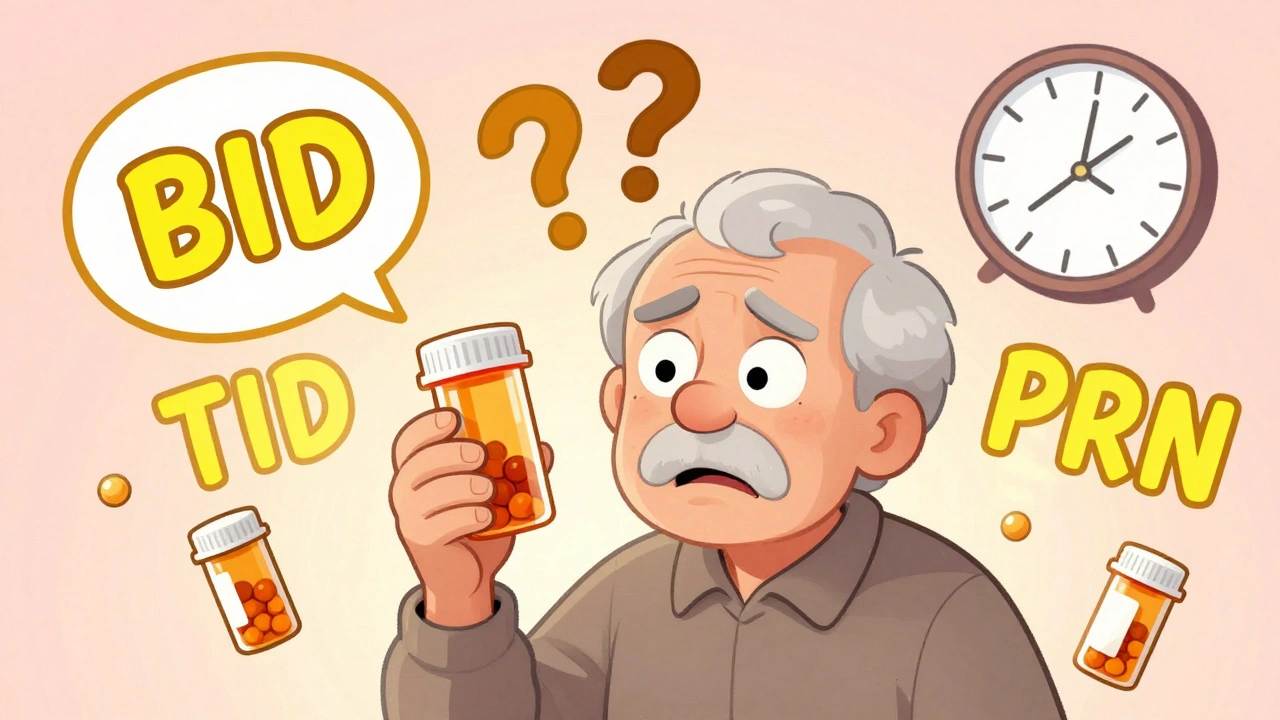
And it’s not just patients who need to understand these codes. Pharmacists, nurses, and even caregivers rely on them daily. A mistake in reading "BID" as "TID" can throw off an entire treatment plan. That’s why the posts below dive deep into how these abbreviations connect to real-world issues: how generic drugs are labeled, how pharmacy systems use codes to prevent errors, how regulatory bodies like the FDA track drug safety, and why even small misunderstandings can lead to big consequences. You’ll find guides on reading your prescription labels, spotting dangerous drug interactions, and understanding why your generic pill might cost more than the brand—even when it’s the same medicine. This isn’t about memorizing a list. It’s about learning to read between the lines so you never have to guess what your doctor or pharmacist meant.
Written by Mark O'Neill
Learn what BID, TID, and PRN really mean on your prescription labels. Stop guessing your dosing schedule and avoid dangerous mistakes with clear, practical advice backed by medical research.