
When a drug gets approved, the work isn’t done—that’s when post-market surveillance, the ongoing monitoring of drugs after they’re sold to the public. Also known as pharmacovigilance, it’s the system that catches side effects too rare to spot in clinical trials, or interactions that only show up when thousands of people start taking the medicine. Think of it like a safety net that only works if people speak up. The FDA, EMA, and other agencies don’t just rely on lab data—they track what happens in real life. A drug might pass every test in a controlled study, but when a 72-year-old with kidney issues takes it with three other pills, something unexpected can happen. That’s where post-market surveillance steps in.
It’s not just about bad reactions. It’s about patterns. If 50 people report the same unusual headache after starting a new generic blood pressure pill, regulators dig in. Was it the active ingredient? A new filler? A batch problem? This is how dangerous interactions like gabapentinoids with opioids, or MAO inhibitors with common foods, get flagged after years of use. It’s also how they learn that smokers need higher clozapine doses, or that warfarin’s bleeding risks spike in older adults. These aren’t guesses—they’re patterns pulled from millions of real prescriptions, patient reports, and pharmacy records. The FDA MedWatch, the official system for reporting adverse drug reactions is one of the most powerful tools here. Your report isn’t just noise—it’s data that can lead to label changes, black box warnings, or even withdrawals.
What you’ll find in these articles isn’t theory. It’s the real-world fallout of post-market surveillance: how tiered copays hide behind rebate systems, why NTI generics need stricter rules, how bioequivalence studies now include women and seniors, and why your insulin storage matters just as much as your dosage. These aren’t random topics—they’re all connected to how drugs behave once they leave the lab and enter your life. You’ll read about how labels are written, how pharmacies avoid mix-ups, and how shortages force smart substitutions. All of it ties back to one thing: safety doesn’t end at approval. It starts there.
Written by Mark O'Neill
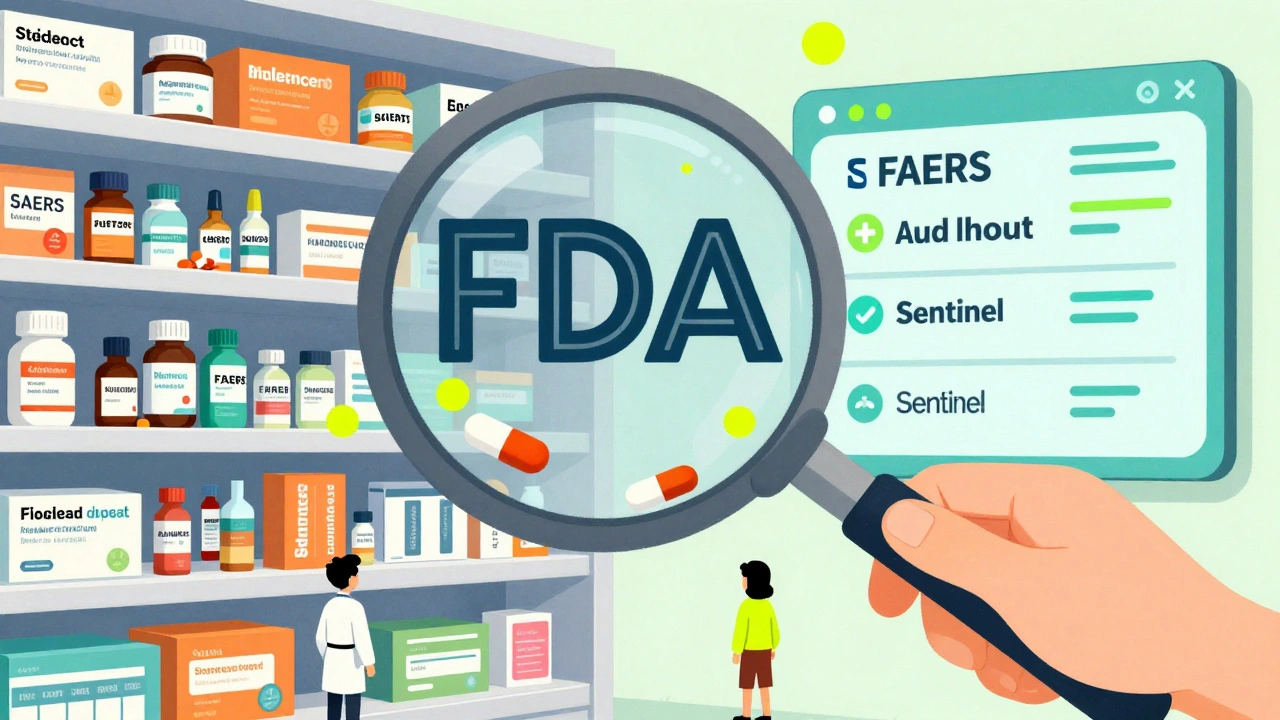
The FDA monitors generic drugs after approval using real-time data, adverse event reports, and factory inspections to ensure ongoing safety. Learn how FAERS, Sentinel, and AI are helping catch hidden risks.