
When you take a pill, you're not just swallowing a chemical—you're starting a conversation between your body and a powerful substance. Precaution, the deliberate act of considering risks before acting. Also known as drug safety awareness, it's what separates safe use from preventable harm. This isn't about fear. It's about control. Every medication, even the ones sold over the counter, comes with hidden triggers—some tied to your age, others to what else you're taking, and some even to what you ate for breakfast.
Take drug interactions, when two or more substances affect each other’s behavior in the body. A common painkiller like ibuprofen might seem harmless, but if you're on blood thinners like warfarin, it can turn a minor bruise into a dangerous bleed. Or consider adverse reactions, unexpected and harmful responses to a drug that aren’t listed as common side effects. One person gets drowsy on gabapentin. Another stops breathing. Why? Because their kidneys can’t clear it fast enough. Or their liver is already stressed. Or they’re smoking—yes, smoking—while on clozapine, which changes how the drug is processed entirely. These aren’t rare cases. They’re predictable if you know what to look for.
And then there’s patient safety, the system of practices designed to prevent harm during medical care. It’s not just the doctor’s job. It’s yours too. Did you know that mixing opioids with gabapentinoids increases overdose risk by nearly 100%? Or that MAO inhibitors can cause a deadly spike in blood pressure if you eat aged cheese or take a common cold medicine? These aren’t theoretical risks. They’re documented in real cases, and they happen because people didn’t ask the right questions—or didn’t speak up when something felt off.
Precaution isn’t a checklist you complete once. It’s an ongoing habit. It’s checking your potassium levels when you’re on heart failure meds. It’s knowing how to store your insulin so it doesn’t go bad. It’s reporting a weird rash to the FDA because your voice might save someone else’s life. It’s asking your pharmacist if that new pill clashes with your old ones. It’s understanding that generics aren’t just cheaper—they’re held to the same standards, but only if the pharmacy system gets the codes right.
You’ll find real stories here: how a simple change in smoking habits nearly killed someone on clozapine, why a perforated eardrum needs quiet and patience, how allergies silently fuel asthma attacks, and why taking two painkillers together might be more dangerous than the pain itself. These aren’t abstract warnings. They’re lessons learned from people who went through it. And they’re here so you don’t have to.
Written by Mark O'Neill
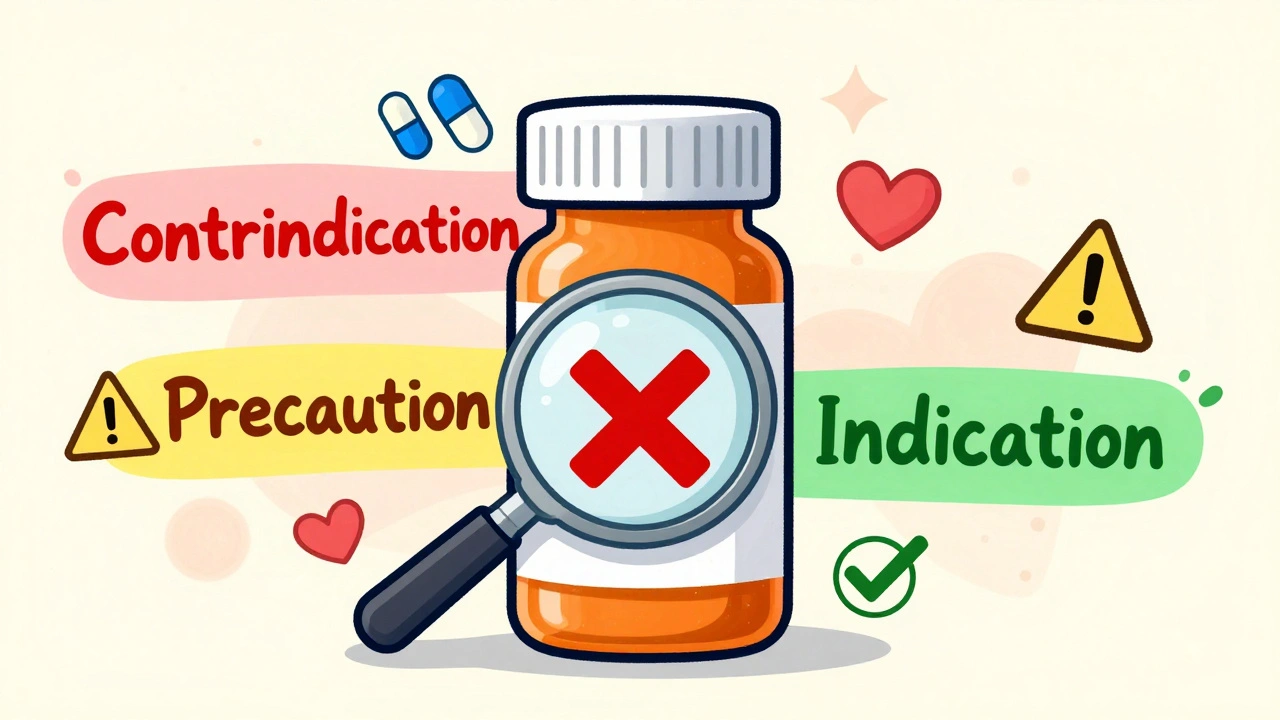
Understand key FDA drug label terms like contraindication, precaution, and indications to use medications safely. Learn what each section means, why it matters, and how to read your prescription label correctly.