
When you pick up a prescription, the prescription label, the official printed guide on your medicine bottle that tells you how, when, and why to take it. Also known as pharmacy label, it’s your first and most important line of defense against medication errors. It’s not just a sticker with your name and dosage—it’s a legal document, a safety warning, and a roadmap for your health. Yet most people glance at it once and never look again. That’s dangerous. A misread label can lead to overdoses, dangerous interactions, or treatments that don’t work at all.
Behind every FDA drug labeling, the standardized system the U.S. Food and Drug Administration uses to approve and regulate how drug information is presented is a strict set of rules. Terms like contraindication, precaution, and indication aren’t just jargon—they’re red flags or green lights. For example, if your label says "avoid alcohol," it’s not a suggestion. It’s a warning tied to real cases of liver damage or dizziness that led to falls. And when you see "take with food," that’s not about comfort—it’s about how your body absorbs the drug. Some meds work poorly on an empty stomach; others cause nausea if taken without a meal. The drug instructions, the specific directions on how to use a medication, including timing, dosage, and special conditions are written by experts who’ve studied how your body reacts under real-world conditions.
But labels aren’t perfect. They don’t always tell you about interactions with supplements you take, or how aging affects how your body processes the drug. That’s why you need to read them carefully—every time you refill. A label for warfarin might warn about bleeding risks, while one for gabapentin might mention drowsiness or breathing trouble when mixed with opioids. The pharmacy labels, the physical labels applied by pharmacists that include patient-specific details like dosage and warnings you get at the counter are customized for you, but they’re built on the same FDA framework. That’s why understanding the basics helps you spot inconsistencies or missing info. If your generic drug’s label looks completely different from the brand version, that’s normal—but if the warnings are missing or unclear, ask.
What you’ll find in the posts below isn’t theory—it’s real-world breakdowns of what those tiny print lines actually mean. You’ll learn why your generic might cost more than the brand, how the FDA tracks drug safety after approval, and what terms like "Narrow Therapeutic Index" mean for your pills. You’ll see how age, sex, and even smoking can change how a drug works—and why your label might need updating. This isn’t about memorizing medical terms. It’s about knowing what to look for, what to question, and how to protect yourself when you’re handed a bottle of pills that could save your life—or hurt you if you don’t read the fine print.
Written by Mark O'Neill
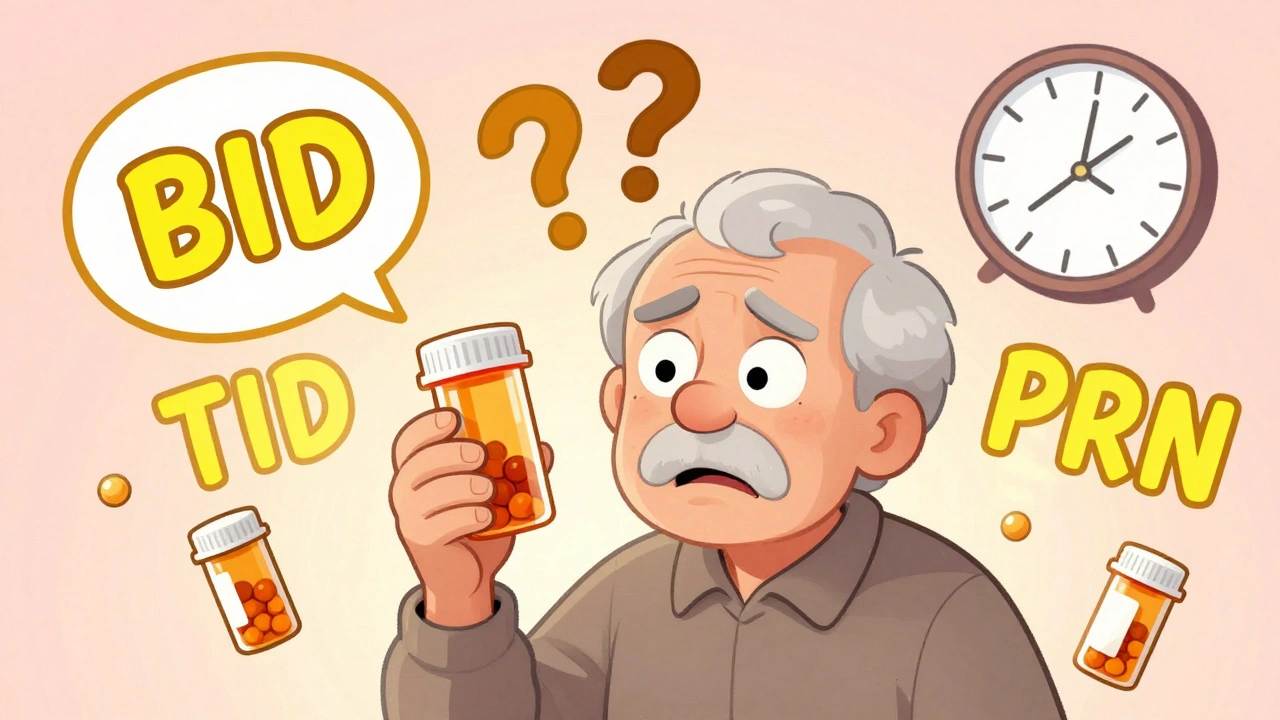
Learn what BID, TID, and PRN really mean on your prescription labels. Stop guessing your dosing schedule and avoid dangerous mistakes with clear, practical advice backed by medical research.