
When you see PRN, a medical abbreviation for the Latin phrase pro re nata, meaning "as the thing is needed". Also known as as-needed medication, it refers to drugs you take only when symptoms appear—not on a fixed schedule. This sounds simple, but PRN meds are one of the most misunderstood parts of your treatment plan. People think, "If it’s as-needed, I can take it whenever I feel like it." That’s not true. Take PRN painkillers, for example. Taking too many too fast can damage your liver. Or consider PRN anti-anxiety pills—using them daily instead of during panic attacks can lead to dependence. These aren’t backup options; they’re precision tools, and using them wrong can be as risky as skipping your daily meds.
PRN medications often overlap with other critical health areas. Drug interactions, when two or more medications affect each other’s effects or safety. Also known as medication clashes, they’re especially dangerous with PRN drugs because people don’t track them like regular prescriptions. For instance, combining PRN opioids with PRN gabapentin can cause dangerous breathing slowdown, especially in older adults. Or think about PRN antacids and blood pressure meds—some antacids block absorption of key drugs, making them useless. Even something as simple as PRN sleep aids can mess with your morning blood sugar if you’re diabetic. These aren’t hypothetical risks. Real cases show people ending up in the ER because they didn’t realize their "just-in-case" pill was making another medication stronger—or weaker.
PRN meds are everywhere: insulin, a hormone used to control blood sugar, often given as a PRN correction dose. Also known as sliding scale insulin, it’s used when blood sugar spikes unexpectedly. But even insulin has rules. Taking extra without checking your glucose first can crash your levels. Same with PRN anti-nausea meds—some make you dizzy, so you shouldn’t take them before driving. Or PRN bronchodilators for asthma—overusing them means your lungs are getting worse, not better. The posts below cover exactly these kinds of real-world traps: how PRN dosing affects people with kidney disease, why older adults are more vulnerable to PRN side effects, how pharmacies flag risky combinations, and what to do when your PRN drug isn’t working. You’ll find guides on spotting hidden dangers in your medicine cabinet, understanding when to call your doctor instead of reaching for another pill, and how to talk to your pharmacist about PRN safety. This isn’t about memorizing a list. It’s about learning how to use these medications like the tools they are—carefully, intentionally, and safely.
Written by Mark O'Neill
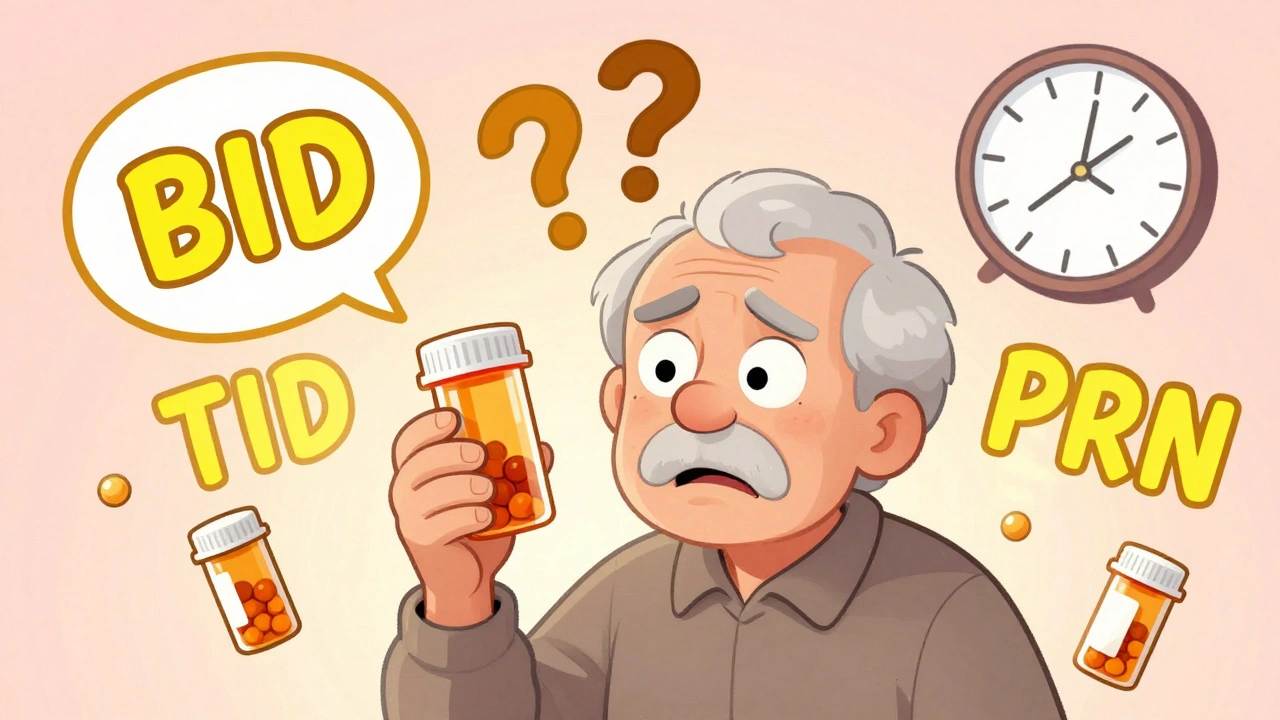
Learn what BID, TID, and PRN really mean on your prescription labels. Stop guessing your dosing schedule and avoid dangerous mistakes with clear, practical advice backed by medical research.