
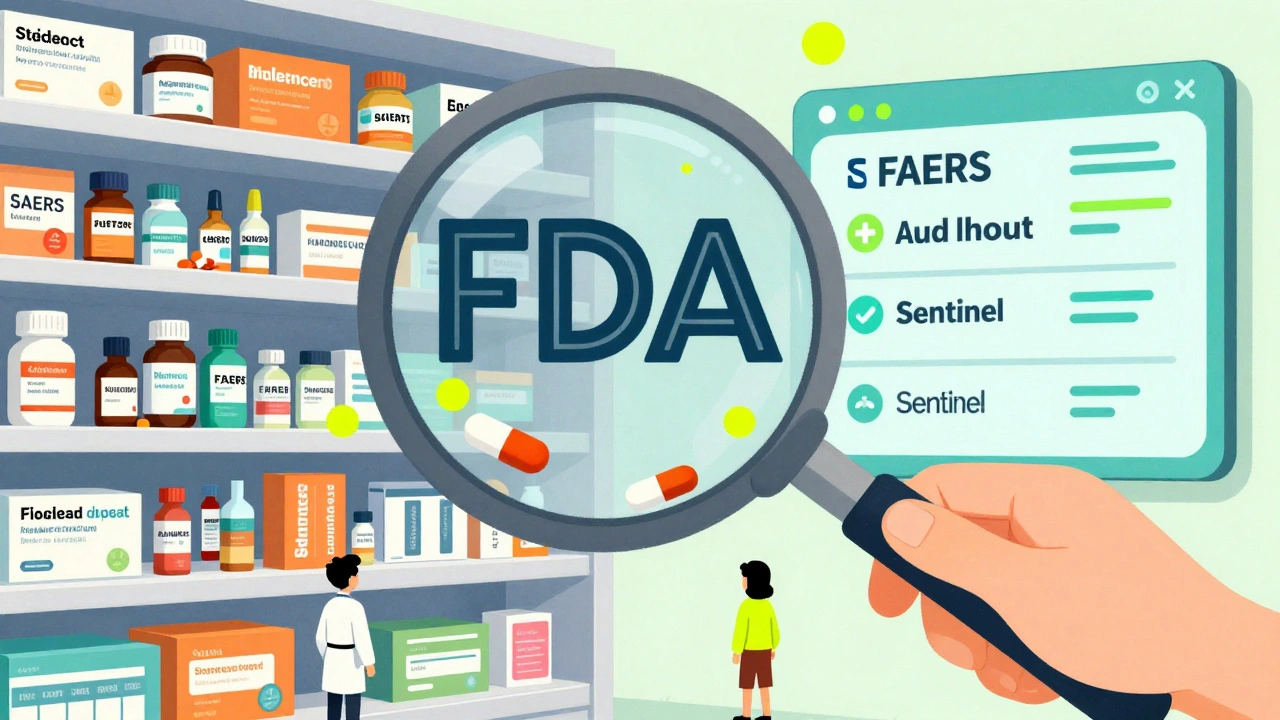
When you take a new medication, you trust it’s safe. But drugs don’t always behave the same way in millions of real people as they did in clinical trials. That’s where the Sentinel Initiative, a nationwide system run by the FDA to monitor drug safety using real-world health data. Also known as FDA Sentinel System, it acts like a early warning network for harmful side effects, drug interactions, and unexpected risks. It doesn’t wait for doctors to report problems — it scans millions of electronic health records, insurance claims, and pharmacy data to spot patterns before they become crises.
This system connects directly to the risks you see in posts about warfarin, a blood thinner with narrow safety margins that demands careful monitoring, or gabapentinoids combined with opioids, a deadly mix that increases overdose risk by nearly 100%. It’s also why the FDA updates labels on drugs like clozapine, an antipsychotic whose dose changes dramatically if you smoke, or why you’re now told to check potassium levels with heart failure meds. The Sentinel Initiative doesn’t just collect data — it turns it into action. When a drug shortage hits, or when a new interaction shows up in the data, this system triggers alerts that change prescribing habits, update labels, and sometimes pull drugs off the market.
What you’ll find in the posts below isn’t just a list of articles — it’s a window into how this system shapes the safety rules you live by. From how generic drugs get approved and why some cost more than brand names, to how to report side effects that could save someone’s life, every post ties back to real-world safety efforts like Sentinel. You’re not just reading about medicine — you’re seeing how patient safety is built, one data point at a time.
Written by Mark O'Neill
The FDA monitors generic drugs after approval using real-time data, adverse event reports, and factory inspections to ensure ongoing safety. Learn how FAERS, Sentinel, and AI are helping catch hidden risks.