
When a drug works, it’s because it hits the right target at the right dose. But when it’s too close to the edge—where the helpful dose and the dangerous dose overlap—that’s where TID, or therapeutic index becomes critical. TID is the ratio between the dose that causes harm and the dose that gives benefit. A high TID means a wide safety margin—like ibuprofen. A low TID means even a small mistake can be deadly—like warfarin or clozapine. This isn’t just theory. It’s why some generics need extra scrutiny, and why your pharmacist checks your INR or blood levels before refilling.
Narrow therapeutic index, a subtype of TID where the difference between effective and toxic doses is tiny, is why drugs like lithium, phenytoin, and cyclosporine can’t be swapped like regular generics. The FDA and EMA treat them differently. They demand tighter bioequivalence standards, more testing across age groups, and real-world monitoring. That’s because a 10% difference in absorption might turn a life-saving dose into a fatal one. And it’s not just about the pill—it’s about how your body handles it. Smoking affects clozapine. Kidney problems change gabapentin levels. Age shifts how your liver processes drugs. That’s why bioequivalence studies now include older adults and women, not just healthy young men. Regulators know that a generic isn’t just a copy—it’s a new variable in your treatment plan.
When you see post-market surveillance, the ongoing tracking of drugs after they’re on the market, that’s the system watching for TID-related failures. The FDA uses FAERS and Sentinel to catch hidden risks: a spike in bleeding with a new warfarin batch, or sudden drowsiness from a reformulated gabapentin. These aren’t hypotheticals. They’ve led to recalls, label changes, and new dosing rules. Your report of a side effect isn’t just feedback—it’s part of the safety net. And when drug shortages hit, switching to an alternative isn’t just about availability—it’s about matching TID profiles. You can’t swap a low-TID drug for one with a wider margin without risk.
What you’ll find below are real stories and hard facts about how TID shapes everything from your prescription label to global drug approvals. From why your generic costs more than expected to how Japan and Canada handle high-risk generics differently, these articles cut through the noise. You’ll learn how to read your meds’ fine print, spot when a change might be dangerous, and understand why some drugs demand more attention than others. This isn’t about fear. It’s about knowing what to watch for—and why your health depends on it.
Written by Mark O'Neill
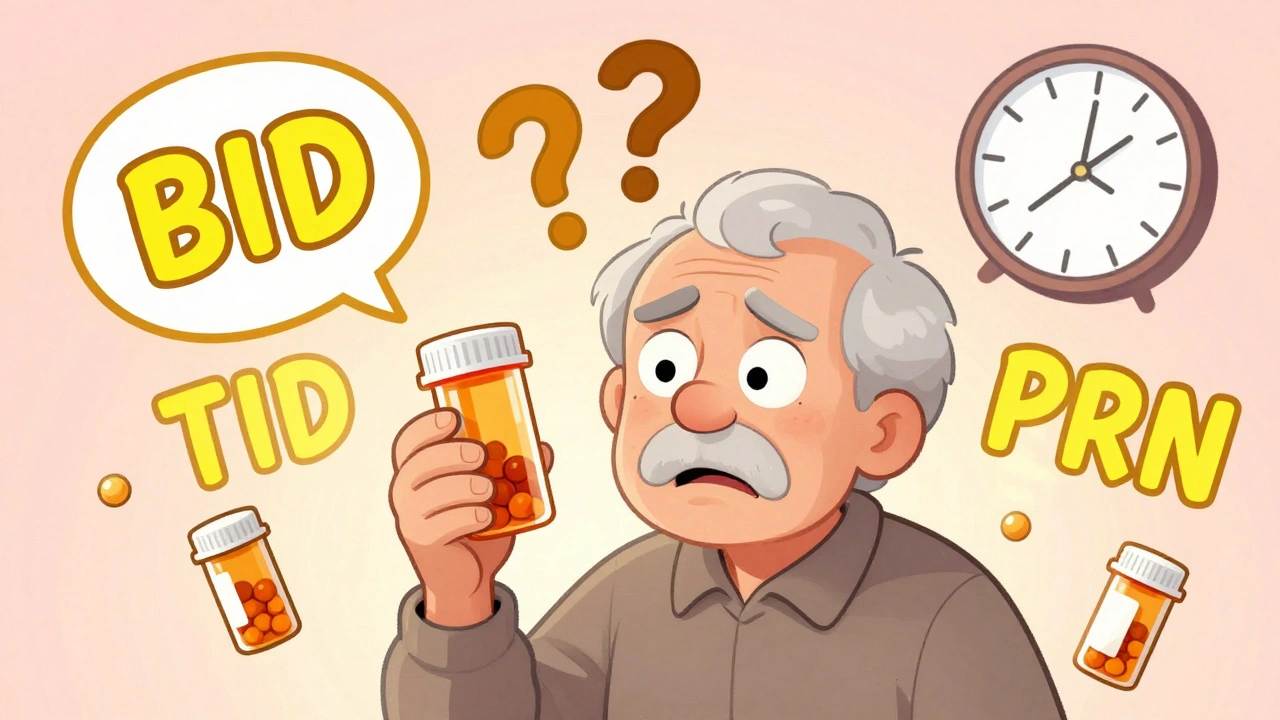
Learn what BID, TID, and PRN really mean on your prescription labels. Stop guessing your dosing schedule and avoid dangerous mistakes with clear, practical advice backed by medical research.