
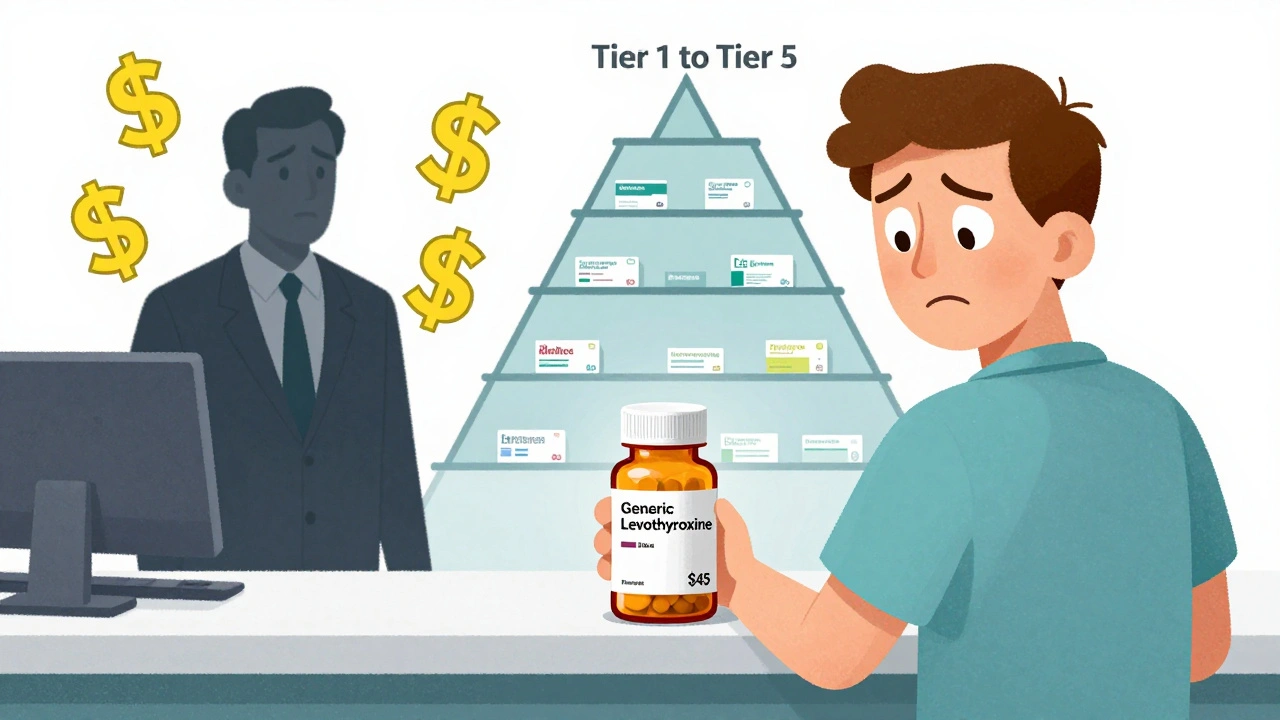
When you pick up a prescription, the amount you pay isn’t random—it’s shaped by your plan’s tiered copays, a system that groups medications into cost levels based on price, brand status, and clinical guidelines. Also known as drug tiers, this structure tells you exactly how much you’ll owe at the pharmacy counter. It’s not about how expensive the drug is overall—it’s about how your insurance company decides to split the cost between you and them.
Tiered copays are tied to your plan’s drug formulary, a list of approved medications organized by cost and clinical effectiveness. Most plans use three to five tiers: Tier 1 is usually generic drugs with the lowest copay, Tier 2 is preferred brand-name drugs, Tier 3 is non-preferred brands, and Tiers 4 and 5 are specialty drugs—like those for cancer or MS—that can cost hundreds or even thousands per month. The higher the tier, the more you pay. This isn’t just about saving money for insurers; it’s meant to steer you toward drugs that work just as well but cost less. But it doesn’t always work that way. Sometimes, the cheapest option isn’t the right one for you, and your plan won’t cover the drug you need unless you jump through hoops—like prior authorization or step therapy.
Understanding tiered copays helps you avoid surprises. If your doctor prescribes a drug, ask which tier it’s on. Check your plan’s formulary online—most insurers list them. If your medication is in Tier 3 or higher, ask if there’s a generic or preferred brand that works just as well. You might also qualify for a cost-sharing reduction if you’re on a high-deductible plan. And if you’re paying too much, you can appeal. Many people don’t know they can ask their insurer to cover a non-preferred drug if the alternatives don’t work for them. This isn’t just paperwork—it’s your right as a patient.
These systems connect directly to real-world issues you see in the news: drug shortages, generic approval delays, and how insurers handle high-risk meds like warfarin or clozapine. When a drug is moved to a higher tier, it’s not just a price change—it can affect whether someone keeps taking their medicine. That’s why knowing how tiered copays work isn’t just about saving money. It’s about making sure your treatment doesn’t get derailed by a formulary decision you didn’t even know existed.
Below, you’ll find real guides that break down how drug costs are set, how pharmacies handle substitutions, and what to do when your insurance won’t cover what you need. These aren’t theory pieces—they’re practical tools for anyone who’s ever stared at a pharmacy receipt and wondered, "Why am I paying this much?"
Written by Mark O'Neill
Why your generic drug might cost more than the brand-name version - it's not about the medicine, it's about rebates. Learn how tiered copays work and what you can do to save money.