
When you take warfarin, a blood thinner used to prevent dangerous clots in people with atrial fibrillation, artificial heart valves, or deep vein thrombosis. Also known as Coumadin, it saves lives—but only if you understand its biggest danger: warfarin bleeding, uncontrolled bleeding caused by too much anticoagulation.
Warfarin works by blocking vitamin K, which your body needs to make clotting factors. Too little vitamin K activity, and your blood can’t clot properly. That’s the whole point—but when your INR (International Normalized Ratio) climbs too high, even a small bump or cut can lead to serious bleeding. This isn’t rare. Studies show up to 1 in 4 people on long-term warfarin will have a major bleed at some point. The risk jumps with age, kidney problems, or if you’re also taking other meds like clindamycin phosphate, an antibiotic that can alter how warfarin is broken down in the liver, or NSAIDs like ibuprofen. Even something as simple as changing your diet—eating more leafy greens one week, less the next—can throw your INR off track.
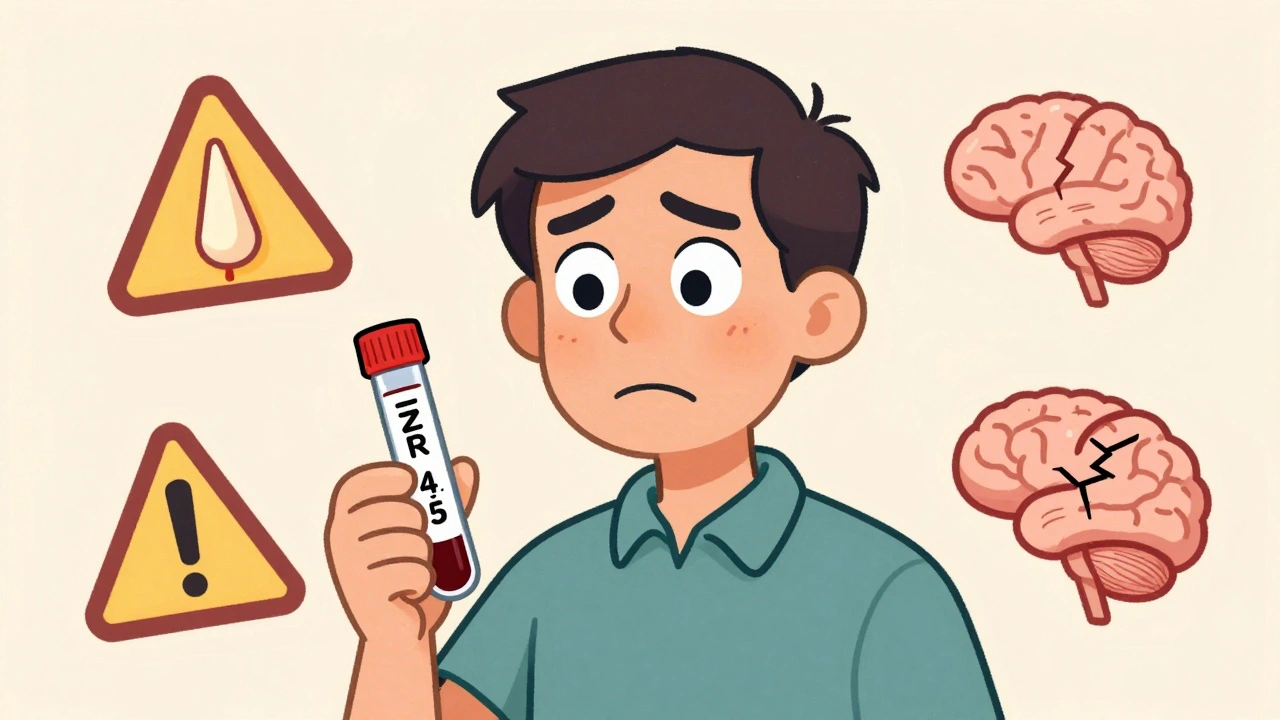
Knowing the signs is your first line of defense. Watch for unusual bruising, nosebleeds that won’t stop, pink or red urine, dark or tarry stools, or headaches that feel different. If you fall hard or hit your head, don’t wait. Internal bleeding in the brain or gut can sneak up fast. Your doctor should check your INR regularly, but you’re the one who notices the little things first. If you’re on warfarin, keep a log of any bleeding episodes—even minor ones. That info helps your provider adjust your dose before something worse happens.
Some people think switching to newer blood thinners like apixaban or rivaroxaban solves everything. But warfarin is still used for many reasons—cost, availability, or specific conditions like mechanical heart valves. That means you can’t just ignore the risks. You need to know how to manage them. That includes avoiding alcohol, checking all new prescriptions for interactions, and never stopping or changing your dose without talking to your doctor. And if you’re ever in doubt about a symptom, call your provider. It’s better to be safe than sorry.
Below, you’ll find real-world guidance on how warfarin interacts with other drugs, how to recognize bleeding before it’s too late, and what steps to take when your body reacts unexpectedly. These aren’t theory pieces—they’re practical, tested insights from people who’ve been there. Whether you’re on warfarin now or caring for someone who is, this collection gives you the tools to stay in control.
Written by Mark O'Neill
Warfarin is a powerful blood thinner that saves lives-but it carries serious bleeding risks. Learn the warning signs, how to reduce your risk, and what to do in an emergency.